 blog
blog
24 Hour Boiler Repair Near Me: Emergency Help Guide
Table of Contents
- 24 Hour Boiler Repair Near Me: What to Expect
- Same-Day Boiler Repair and Realistic Response Times
- What to Do Before Your Engineer Arrives
- Boiler Repair Cost: What Affects the Final Bill
- Checking Your Gas Safe Registered Boiler Engineer
- Boiler Breakdown Cover: Is It Worth It?
- Repair or Replace? Making the Call
- Frequently Asked Questions
Last Updated: October 15, 2026
24 Hour Boiler Repair Near Me: What to Expect
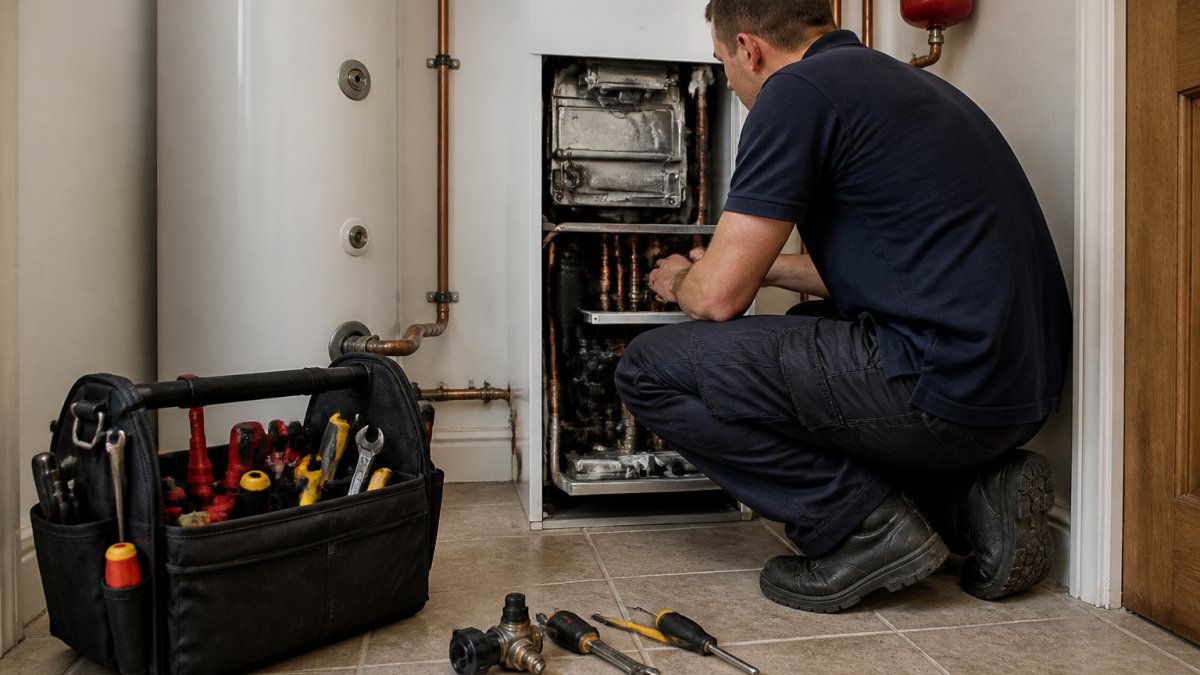
When your heating fails at 11pm in January, searching for "24 hour boiler repair near me" is usually the first thing you do.
Not every "24 hour" advert means an engineer will be at your door within the hour. What it should mean is that someone answers your call, triages the fault, and gives you a realistic arrival window.
Below, we break down response times, costs, safety checks, and the repair-or-replace decision.
Same-Day Boiler Repair and Realistic Response Times
Most same-day boiler repair call-outs are completed within a few hours, but the exact window depends on your location, the time you ring, and how many emergencies are queued.
What Speeds Up or Slows Down an Emergency Call-Out
Several factors decide how quickly an engineer reaches you:
- Your postcode and distance from the nearest hub. A city-centre address is usually reached faster than a remote rural property.
- Time of day. Late-night and early-morning calls often get faster dispatch because the queue is shorter.
- Weather. A cold snap triggers a surge in boiler breakdowns, and every engineer in the area is stretched.
- Fault type. A failed pump or a leaking pipework issue may need parts that are not always on the van.
- Access. Gated properties, locked communal doors, or a boiler in a hard-to-reach loft add time.
What to Do Before Your Engineer Arrives
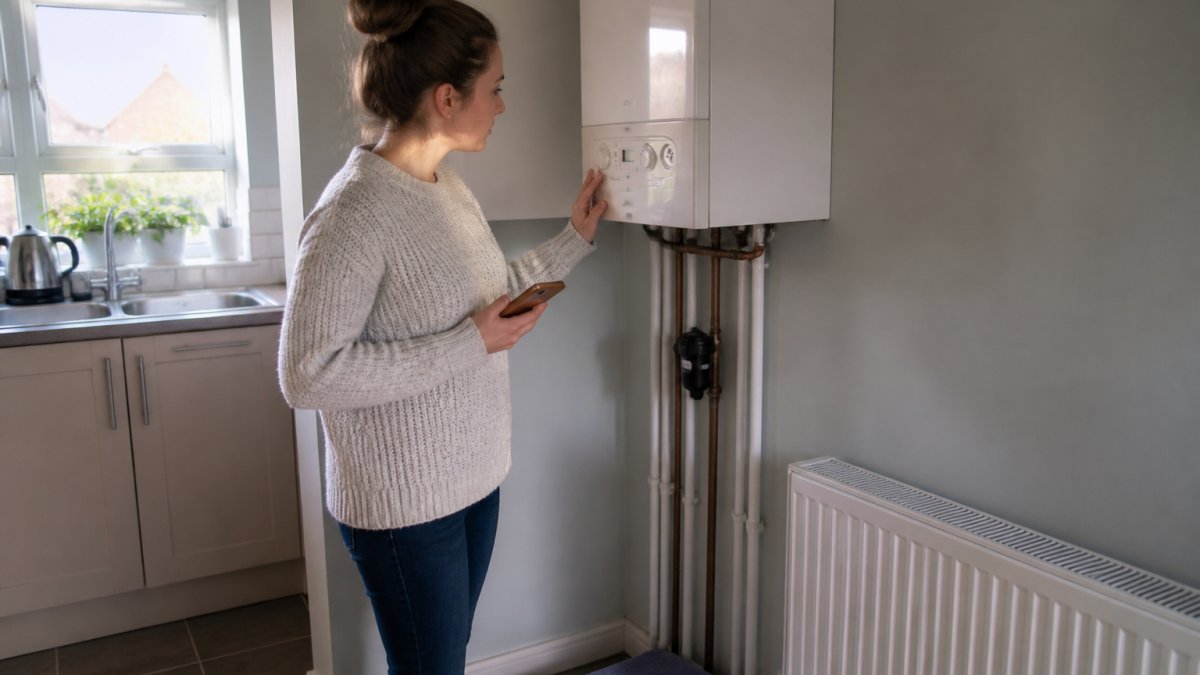
While you wait, a few steps protect your home and speed up the repair. Turn off the boiler at the fused spur if you smell gas or see water near electrics, and open windows if you suspect a leak.
A practical pre-visit checklist:
- Note the fault code and any error message on the display
- Check the pressure gauge; a reading below 1 bar often points to a simple top-up
- Confirm the gas supply is on and other gas appliances work
- Clear access to the boiler and any airing cupboard
- Move valuables and floor coverings away from pipework
- Keep pets and children clear of the work area
If you smell gas, do not wait for an engineer. For safety guidance on gas appliances, the Gas Safe Register official guidance is the definitive reference.
Boiler Repair Cost: What Affects the Final Bill
Most pages that rank for this query tell you a 24 hour engineer is available and then go quiet on what the visit will cost. Here is the honest breakdown of how an emergency boiler repair bill is built, what typical figures look like, and the questions that stop a quote from ballooning.
The three parts of every bill
Almost every emergency call-out is priced from three components:
- Call-out or attendance charge. A fixed fee to get an engineer to your address. It is charged whether or not the fault is fixed on the first visit.
- Labour. Charged as a fixed first-hour rate or in half-hour blocks after that. Complex strip-downs, poor access and older appliances push this up.
- Parts. The variable that decides whether a repair is £120 or £600. A thermocouple, diverter valve or PCB sit at very different price points, and manufacturer-only or discontinued components add cost and a wait for delivery.
A straightforward fault, a blocked condensate pipe, a pressure top-up, a reset that holds, is often resolved inside the call-out and first hour. A mid-range repair such as a pump, fan or diverter valve can be more involved. A heat exchanger, main PCB on a premium appliance, or a repair needing two visits can be a significant undertaking.
These are indicative ranges, not quotes. The final figure depends on your appliance, postcode and the time you call, which is why a firm price given before the engineer has seen the boiler should be treated with suspicion.
What pushes the number up
| Cost factor | What it covers | What pushes it higher |
|---|---|---|
| Call-out charge | Engineer attendance | Late-night, weekend and bank holiday rates |
| Labour time | Diagnosis and repair on site | Complex faults, poor access, older systems |
| Parts | Replacement components | Rare or discontinued parts, manufacturer-only stock |
| System condition | Sludge, scale, corrosion found during the visit | Neglected systems needing a flush before repair |
| Access | Getting to the appliance and pipework | Loft boilers, sealed cupboards, communal entry |
Questions that protect your wallet
Before you agree to a visit, ask:
- What is the call-out fee, and does it change out of hours?
- Is the first hour of labour included in that fee?
- Are parts charged at cost plus a margin, or at a fixed schedule?
- Will I be told the total before any work beyond diagnosis begins?
- Is there a charge if I decline the repair after diagnosis?
A reputable engineer will answer all five without hesitation. Vague answers are a warning sign.
For a clear figure for your situation, request a quote from Central Heating Scotland and we will assess your system before you commit.
Checking Your Gas Safe Registered Boiler Engineer
Always confirm your engineer holds a valid Gas Safe registration before any work begins. In the UK, anyone working on gas appliances must be on the Gas Safe Register, and you can check a card or the online register in under a minute. Unregistered work risks carbon monoxide exposure and invalidates your home insurance.
What the register actually covers
Gas Safe registration is not a blanket qualification. An engineer is registered for specific categories of work, and the ID card lists exactly which, including:
- Domestic gas boilers and central heating, the core category for a household boiler repair.
- Gas cookers, fires and water heaters, separate categories that a boiler engineer may not hold.
- Commercial gas work, a different registration entirely, not transferable to a domestic property.
- LPG, required if your property runs on LPG rather than mains natural gas.
If your appliance is a boiler and the card does not list domestic boilers, the engineer is not certified for that job, however experienced they appear. Ask to see the card before work starts.
How to verify credentials quickly
- Ask to see the engineer's Gas Safe ID card on arrival.
- Check the photo, the licence number and the expiry date.
- Confirm the card lists the type of work being done, such as domestic boilers.
- Cross-check the licence number on the Gas Safe Register website.
- Keep a record of the engineer's details with your boiler paperwork.
If you cannot verify the engineer
If an engineer cannot produce a card, the number does not check out, or the listed categories do not match the work, stop the visit. You are entitled to refuse entry and ask the company to send a correctly registered engineer. Do not proceed on a verbal assurance or accept a photograph of a card.
When to stop using the boiler entirely
Some faults are safe to live with until an engineer arrives; others are not. Turn the boiler off at the fused spur and stop using it if you notice any of the following:
- A smell of gas anywhere in the property.
- Soot, scorching or black marks around the appliance.
- A yellow or orange flame instead of a crisp blue one.
- Repeated lockouts that return immediately after a reset.
- Water escaping from the appliance itself.
- Symptoms in occupants such as headaches, dizziness or nausea that ease when you leave the property.
If you smell gas, do not wait for an engineer. Leave the property and call the National Gas Emergency Service on 0800 111 999 immediately. That number is free and operates around the clock. For safety guidance on gas appliances, the Gas Safe Register official guidance is the definitive reference.
Beyond gas: electrical and unvented work
Not every boiler fault is a gas fault. Work on an unvented hot water cylinder is regulated separately and should be carried out by someone with the appropriate unvented competence. Electrical faults at the boiler's fused spur or wiring centre fall under electrical safety rules, and the engineer should be competent for that work too. When you book, ask what registrations the attending engineer holds.
Boiler Breakdown Cover: Is It Worth It?
Boiler breakdown cover spreads the cost of repairs across monthly payments, but it only pays off if the policy terms match how you use your heating. For an older, fault-prone boiler, cover can be good value. For a newer appliance still under a manufacturer warranty, it often duplicates protection you already have.
Before you sign up, check:
- Excess and call-out limits. Some policies charge per visit even with cover.
- Parts and labour caps. A cap can leave you paying the difference on major repairs.
- Servicing inclusion. Annual servicing is often included and worth having on its own.
- Waiting periods. Many policies exclude claims in the first weeks.
- Exclusions. Sludge, scale, and pre-existing faults are commonly excluded.
If you are a landlord, remember that a valid CP12 Landlord Gas Safety Certificate is a separate legal duty from any breakdown cover, and one does not replace the other.
Repair or Replace? Making the Call
The repair-or-replace decision usually comes down to the age of the boiler, the cost of the fault, and how often it has failed.
Weigh these signals:
- Age. Older units are less efficient and parts get harder to source.
- Repair frequency. Repeated breakdowns point to a system at the end of its life.
- Fault severity. A cracked heat exchanger is rarely worth repairing.
- Efficiency. A modern condensing boiler can cut running costs noticeably.
- Parts availability. Discontinued components can mean long waits for heat.
We give honest advice on this. If a repair will genuinely see you through several more years, we will say so rather than push a replacement. If a new boiler makes more financial sense, we will show you the options, including leading brands such as Worcester Bosch, Vaillant, Ideal, Vokera, and Alpha.
A broken boiler in winter is stressful, and the last thing you need is an engineer who does not turn up or a bill that balloons without warning.
Frequently Asked Questions
How quickly can an emergency boiler engineer attend?
Response times vary by provider and location. Many 24 hour boiler repair services aim for same-day attendance, but remote areas and peak winter demand can extend this. When you call, ask for a realistic arrival window rather than a vague promise. A good engineer will confirm whether your postcode falls inside their service area before booking, so you are not left waiting for a van that never arrives.
What should I check before booking a 24-hour boiler repair?
Before booking, confirm the engineer is Gas Safe registered and ask for their registration number. Check whether the call-out covers your postcode, what the diagnostic fee includes, and whether parts are stocked on the van. Also ask if the quoted price covers the first hour or only the visit. Getting these details upfront helps you compare same-day boiler repair options fairly and avoid surprise charges later.
How can I check whether a boiler engineer is Gas Safe registered?
Ask to see the engineer's Gas Safe ID card when they arrive, and check the photo, licence number, and the types of work they are qualified for. You can also verify the registration on the Gas Safe Register website. Working with a non-registered engineer is illegal and can invalidate your home insurance, so it pays to confirm credentials before any gas work begins.
What should I do if my boiler breaks down at night?
If your boiler fails overnight, check the thermostat, pressure gauge, and power supply first, as these are common quick fixes. If the boiler still will not fire, turn off the gas supply if you smell gas and call the National Gas Emergency Service on 0800 111 999. For non-gas emergencies, contact a 24 hour boiler repair provider and describe the fault clearly so they can prioritise your call.