 how-to
How Quickly Can a Boiler Be Repaired? Times Explained
Table of Contents
- How Long Does Boiler Repair Take? Realistic Timelines
- Repair Times for Common Boiler Faults
- Emergency Boiler Repair: What to Expect When You Call
- Same Day Boiler Repair: How It Works and When It's Possible
- What Happens During Diagnosis and When a Second Visit Is Needed
- Boiler Repair or Replacement: Making the Right Call
- How to Prepare for an Engineer Visit and Avoid Delays
- Frequently Asked Questions
Last Updated: October 19, 2026
How Long Does Boiler Repair Take? Realistic Timelines
Most boiler repairs take between one and two hours on site, but the full boiler repair time from your first call to hot water running again is usually longer. That gap catches people out.
Below, we break down realistic repair times for each common fault, explain why your appointment slot and the actual repair are two different numbers, and show you how to cut the wait.
Appointment Wait Time vs Time Spent on the Repair
Two clocks run during a boiler breakdown: how long you wait for an engineer to arrive, and how long they spend fixing the boiler once through the door. Most people only think about the second clock. That is a mistake.
- Appointment wait: varies by season, postcode and how busy engineers are. Winter cold snaps push waits up sharply.
- On-site repair time: one to two hours for most common faults, longer if parts are needed.
- Total boiler repair time: the two added together, plus any return visit for a replacement part.
A same-day boiler repair means the engineer reaches you that day. It does not promise a five-minute fix. Knowing the difference stops you panicking when the engineer is still working an hour in.
Repair Times for Common Boiler Faults
Most guides give one number per fault and leave it there. A boiler repair actually has three clocks: diagnosis, the fix once the cause is known, and any wait for a part.
The table below shows typical times for a Gas Safe registered heating engineer who has the right part on the van. Where a second visit is likely, the parts-ordering time is shown separately so you can see how a short repair can stretch over several days.
| Fault | Typical diagnosis time | Typical on-site repair time | Parts-ordering time if needed | Second visit needed? |
|---|---|---|---|---|
| Low boiler pressure | 10-20 minutes | 15-30 minutes | Not usually required | Rarely |
| Frozen condensate pipe | 10-15 minutes | 30-60 minutes | Not usually required | No |
| Faulty thermostat | 20-30 minutes | 30-90 minutes | 1-2 working days for non-stock models | Sometimes |
| Water leak from a component | 20-40 minutes | 1-2 hours | 1-3 working days depending on part | Sometimes |
| Failed pump or fan | 20-40 minutes | 1-2 hours | Same day if carried; 1-3 working days if ordered | Often, if part not carried |
| Corroded or scaled parts on an old boiler | 30-60 minutes | 2 hours plus | 2-5 working days for older or discontinued parts | Often |
The pattern is simple. Quick fixes stay quick. Anything needing a replacement part depends on parts availability, not on how fast the engineer works.
Low Boiler Pressure and Pressure Loss
Low pressure is one of the fastest fixes on the list. An engineer can usually top up the system and check for pressure loss in under half an hour, since the cause is often visible on the gauge or filling loop.
The catch is finding out why the pressure dropped. A one-off top-up is a 15-minute job. Repeated pressure loss points to a water leak or a failed component, and that turns a quick call-out into a longer diagnosis. If your boiler keeps losing pressure, do not keep topping it up.
Frozen Condensate Pipes
A frozen condensate pipe is a classic winter boiler fault, usually resolved within the hour: the engineer thaws the pipe, checks the run and confirms the boiler relights. The real delay is getting an engineer to you during a cold snap, when frozen condensate calls flood in. That is an appointment-wait problem, not a repair-time problem.
Leaks, Faulty Thermostats and Strange Noises
Leaks, faulty thermostats and strange noises cover a wide range, which is why repair times vary so much and why the diagnosis column matters as much as the repair column.
- Faulty thermostat: 30-90 minutes to test and replace, sometimes longer if it is a smart thermostat that needs reconnecting. Diagnosis can take 20-30 minutes because the engineer has to rule out the boiler, the wiring and the programmer before blaming the thermostat itself.
- Water leak: one to two hours to trace and seal, longer if the leak has damaged surrounding parts. Diagnosis is often the slower half because water can travel along pipework before it shows.
- Strange noises: depends entirely on the cause. A noisy pump or fan often means component replacement, which can mean a second visit and a parts-ordering delay.
What most guides miss is that a strange noise is a symptom, not a fault. Repair time depends on what the noise tells the engineer, known only once diagnosis is under way. If the part is not on the van, the repair clock pauses while it is ordered.
Emergency Boiler Repair: What to Expect When You Call
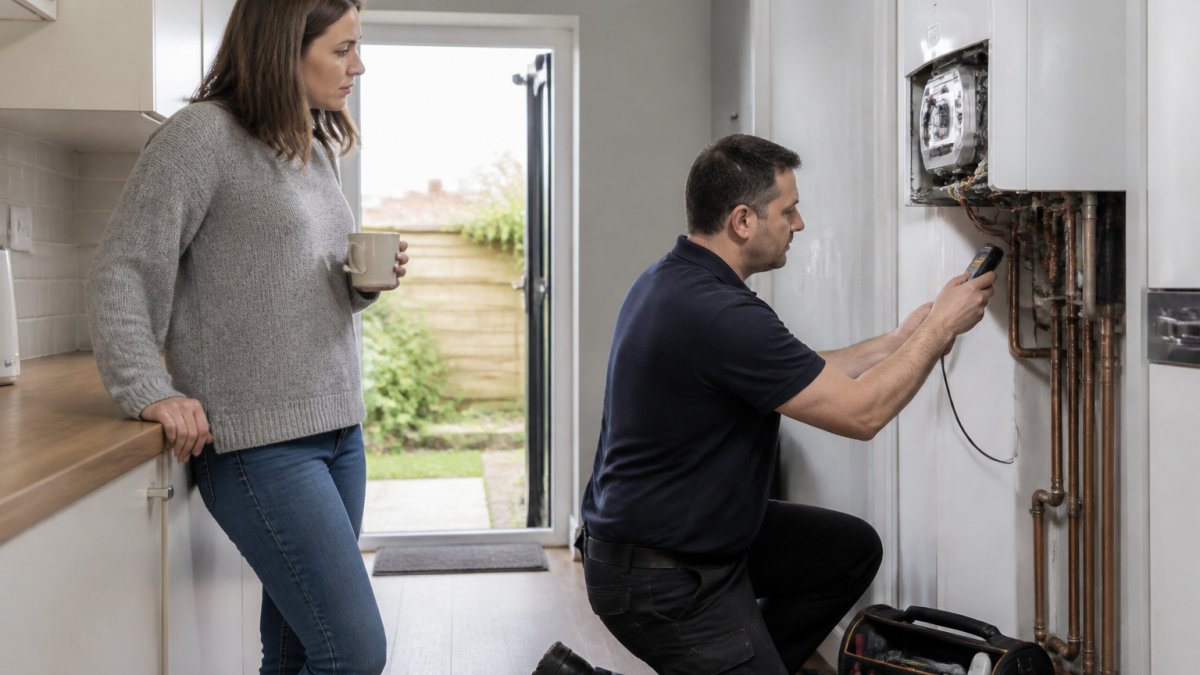
Emergency boiler repair is about speed and safety, not just a fast fix. Expect a triage conversation first: what the boiler is doing, whether there is any smell of gas, and whether you have heating or hot water.
Safety comes before repair time. If you smell gas, turn off the supply at the meter and call the gas emergency line. Do not wait for a repair booking.
For everything else, a good engineer will give you a realistic arrival window and a triage decision. A common pattern is:
- Same-day emergency visit: no heat or hot water, a leak that is contained, or a fault code that suggests a component failure. The engineer aims to reach you that day and diagnose on site.
- Next-day appointment: heating works but hot water does not, or the fault is intermittent. These are uncomfortable but rarely urgent.
- Gas emergency service: any smell of gas, signs of carbon monoxide, or a boiler that has been declared unsafe. Do not book a repair first.
While you wait, switch the boiler off at the controls if it is leaking, making unusual noises, or showing warning signs.
At Central Heating Scotland, our Gas Safe registered engineers aim for same-day emergency boiler repair, and we confirm the slot rather than leaving you guessing.
Same Day Boiler Repair: How It Works and When It's Possible
Same day boiler repair is possible when three things line up: the fault is diagnosable on site, the engineer has the part, and you are within their coverage area. Miss any one and the job rolls to a second visit.
It works like this:
- You call and describe the fault.
- The engineer triages it and books the earliest slot.
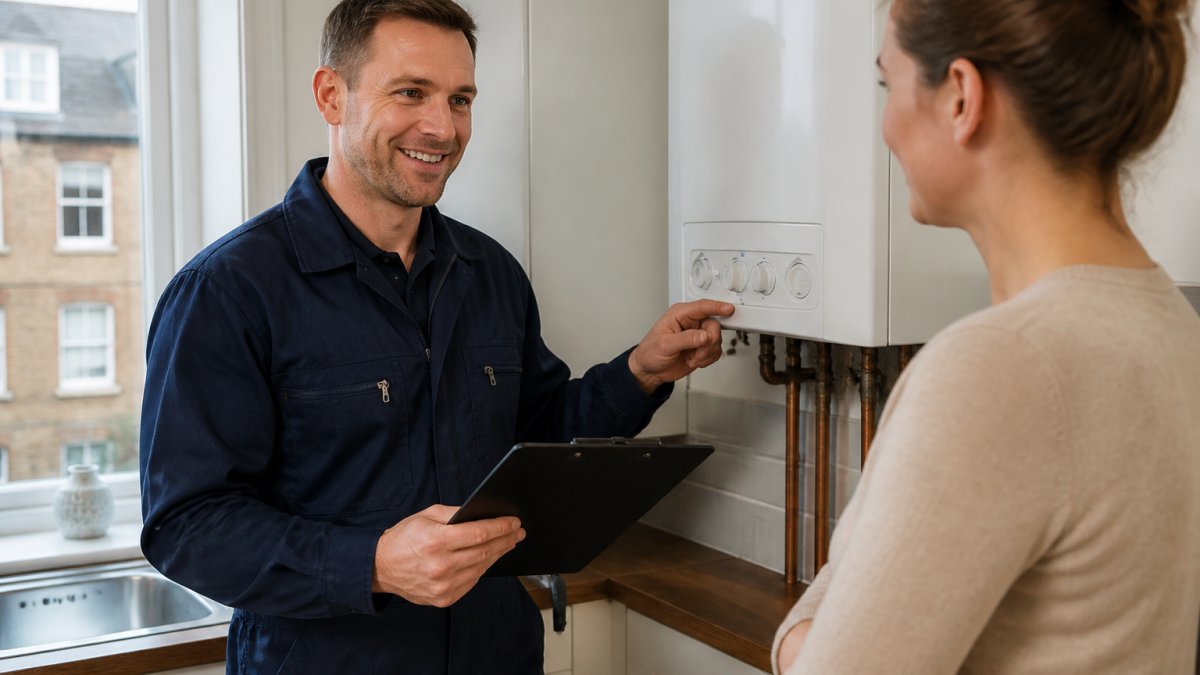
- They diagnose on arrival and confirm the fix.
- They repair on site if the part is on the van.
- If not, they order the part and book the return.
The single biggest factor in whether same-day repair happens is parts availability. A common part like a pump or a thermostat is often carried.
Boiler type and age matter too: a modern combi with a known fault is quicker to diagnose than an old system boiler with corrosion and worn parts.
What Happens During Diagnosis and When a Second Visit Is Needed
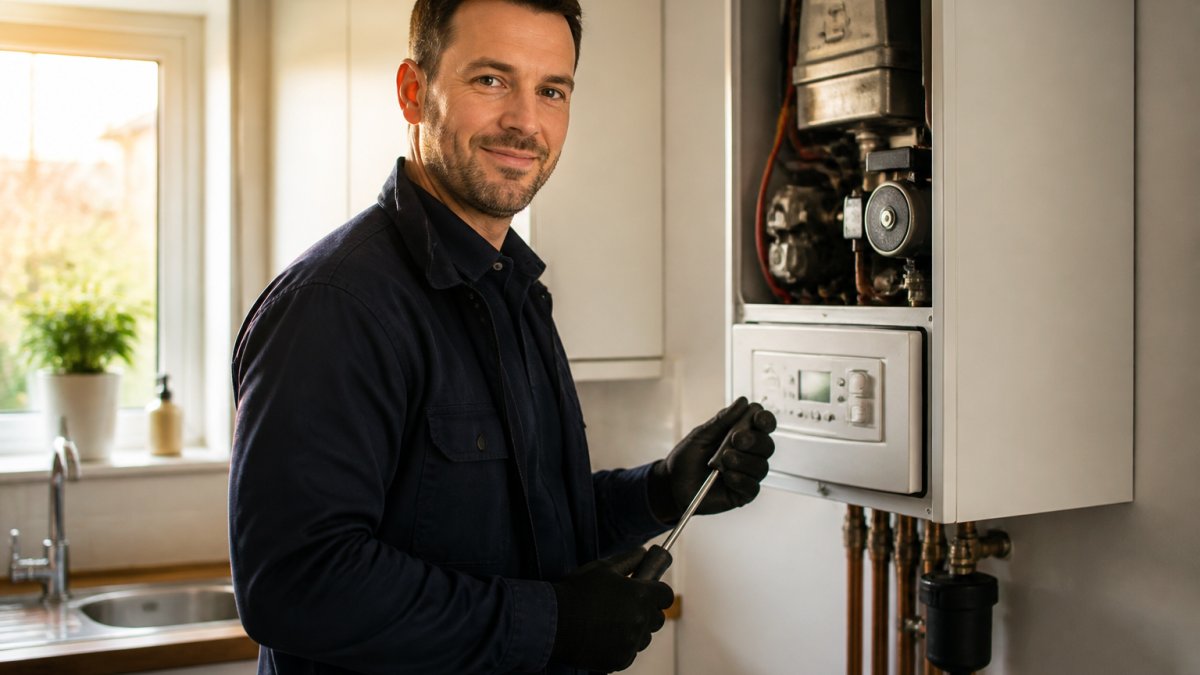
Diagnosis is the fault-finding stage, and it is where the real boiler repair time is decided. The engineer tests the boiler, reads fault codes, checks pressure and flow, and traces the fault to a specific component.
Most diagnoses take 20 to 40 minutes. From there, one of two things happens.
- Fix on the spot: the faulty part is on the van and gets replaced. Total time stays within the one-to-two-hour window.
- Second visit: the part needs ordering, or the fault is deeper than first thought. The engineer orders the replacement part and books a return.
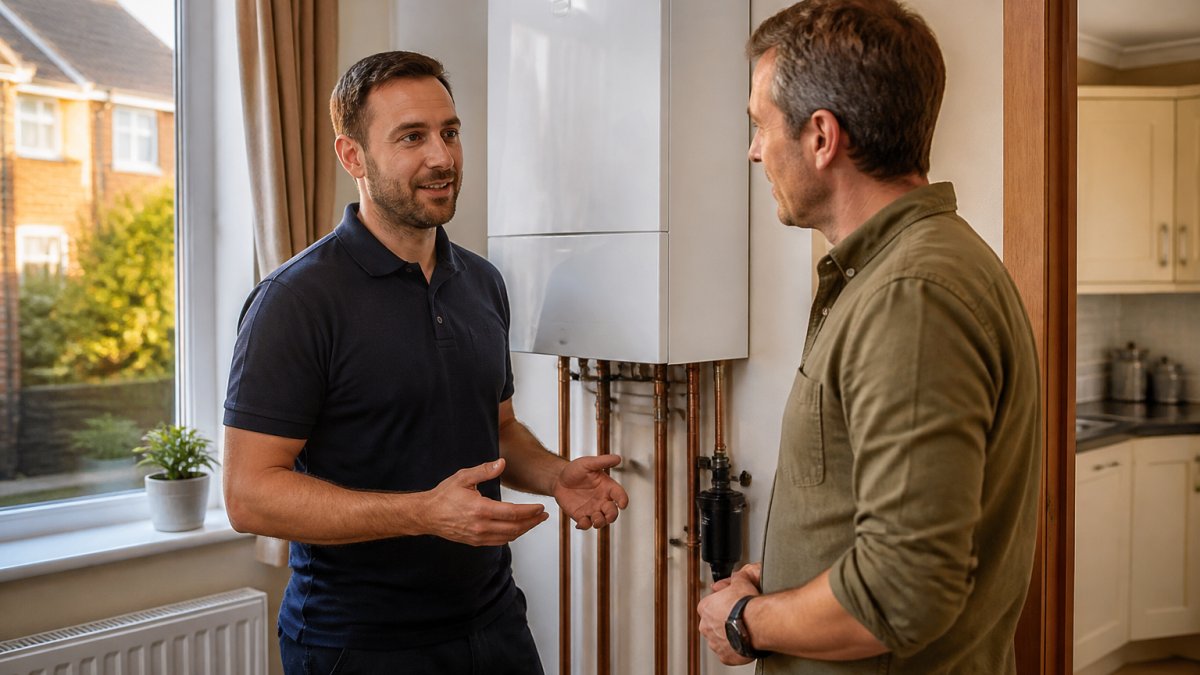
A second visit is not a failure. What matters is that the engineer tells you why, gives a realistic timescale, and does not leave you without a plan. If you are waiting on parts, ask for the expected delivery date before they leave.
Boiler Repair or Replacement: Making the Right Call
Boiler repair or replacement is the decision that matters most when your boiler keeps breaking down. Repair wins when the fault is isolated, the boiler is reasonably modern, and the fix is minor.
Ask three questions:
- How old is the boiler, and is it still under warranty?
- How often has it broken down in the last two years?
- Is the current fault a one-off, or a sign of worn parts across the system?
An old boiler with repeated faults and falling efficiency usually costs more to keep alive than to replace. A newer boiler with a single fault is nearly always worth repairing.
At Central Heating Scotland, we give honest advice on this rather than pushing the expensive option. If a repair is the right call, we say so. If replacement makes more financial sense, we explain why.
How to Prepare for an Engineer Visit and Avoid Delays
Preparing for the visit is the easiest way to shorten your boiler repair time. A few minutes of prep can save an hour of engineer head-scratching.
- Clear access to the boiler and any cupboards around it
- Note the boiler make, model and any fault code on display
- Have your service history and warranty details to hand
- Confirm someone will be home for the full arrival window
- List any symptoms: noises, pressure drops, error codes, when it started
If you are a landlord, keep your CP12 Landlord Gas Safety Certificate up to date too. A repair visit is a good moment to check the certificate date so compliance does not catch you out later.
A boiler breakdown is stressful enough without guessing how long you will be without heat. The fix itself is often quick, but diagnosis, parts availability and appointment waits all shape the real timeline. Central Heating Scotland provides Gas Safe registered engineers, same-day emergency boiler repair and full coverage across Glasgow and the west of Scotland, with honest advice on repair versus replacement.
Frequently Asked Questions
How long does a typical boiler repair take?
Most common faults, such as low pressure, frozen condensate pipes or a faulty thermostat, are fixed within one to two hours on site. Complex issues involving internal components or water leaks can take longer, sometimes several hours or a second visit if parts need ordering. The boiler repair time depends on the fault type, boiler age and parts availability. A Gas Safe registered engineer will diagnose the problem first, then give you a realistic estimate before starting work.
Can a boiler be repaired on the same day?
Yes, same day boiler repair is often possible for straightforward faults when you book early. Engineers typically carry common replacement parts for popular boiler brands, so many repairs are completed in a single visit. If the fault is complex or a specialist part is needed, a follow-up appointment may be required. Booking with a local provider that covers your area increases the chance of a same-day slot, especially for emergency boiler repair.
Why might a boiler repair take more than one visit?
A second visit usually happens when the engineer needs a replacement part that isn't carried on the van, or when the fault is intermittent and doesn't show up during the first diagnosis. Older boilers and less common models can also mean longer waits for parts availability. In these cases, the engineer will explain the delay and book a return visit as soon as the component arrives, keeping you informed throughout.
Can I use my boiler while waiting for a repair?
Only if the engineer has confirmed it is safe to do so. If you smell gas, see water leaking near electrics, or the boiler has been locked out repeatedly, leave it switched off and call a Gas Safe registered engineer immediately. For minor issues like low pressure or a faulty thermostat, the boiler may still run, but avoid repeated resetting. Never attempt to repair internal gas components yourself, as this is illegal and dangerous.