 comparison
Combi vs System Boiler for a Family Home
Last Updated: November 13, 2026
Quick Summary
The combi vs system boiler choice depends on how your family uses hot water: a combi heats water on demand with no cylinder, while a system boiler stores hot water in a cylinder. Combi boilers suit smaller households with one bathroom, whereas system boilers suit families running two or more bathrooms at once.
- A combi splits its output between outlets, so two showers running together lose pressure.
- A system boiler's cylinder capacity and reheat time set the limit, not the boiler's output.
- A system boiler costs £600-£1,200 more for the cylinder plus £1,200-£2,200 installation labour.
- Stored hot water adds roughly £50-£150 a year in standing heat loss.
- An installer should record mains pressure and flow checks in writing before you commit.
Table of Contents
- Combi vs System Boiler: The Core Difference for Families
- How a Combi Boiler Delivers Hot Water
- How a System Boiler Uses Its Hot Water Cylinder
- Combi vs System Boiler Pros and Cons at a Glance
- Hot-Water Performance: Peak Demand and Simultaneous Outlets
- Combi Boiler for Multiple Bathrooms: Where It Works and Where It Struggles
- Sizing the System Boiler Hot Water Cylinder to Your Household
- Combi vs System Boiler Running Costs and Whole-Life Cost
- Low Mains Pressure, Future Upgrades and the Installer Assessment
- Book a Boiler Suitability Assessment
- Frequently Asked Questions
Combi vs System Boiler: The Core Difference for Families
The combi boiler vs system boiler decision comes down to one question: do you want hot water made the moment you open a tap, or stored in a cylinder ready for use? That single difference shapes everything else, from how many showers run at once to how much space your airing cupboard gives up.
Combi boilers generally suit smaller, busier households. System boilers generally suit homes where two or more bathrooms get used at the same time. Below, we explain how each works, what each costs to run over its life, and how to tell which one your family actually needs.
How a Combi Boiler Delivers Hot Water
A combi boiler heats water directly from the mains as you use it, with no cylinder and no tank. Cold water enters the boiler, a gas burner heats it, and it flows straight to your taps and showers. Nothing is stored, so there is no standing heat loss and no cylinder to reheat.
The trade-off is flow rate. One outlet at a time works well. Open a second shower while the first is running and both lose pressure, because the boiler splits its output between them. This is why the combi boiler for multiple bathrooms question matters so much. A combi is excellent for a single-bathroom home with a busy morning routine. It struggles once two hot outlets run simultaneously.
How a System Boiler Uses Its Hot Water Cylinder
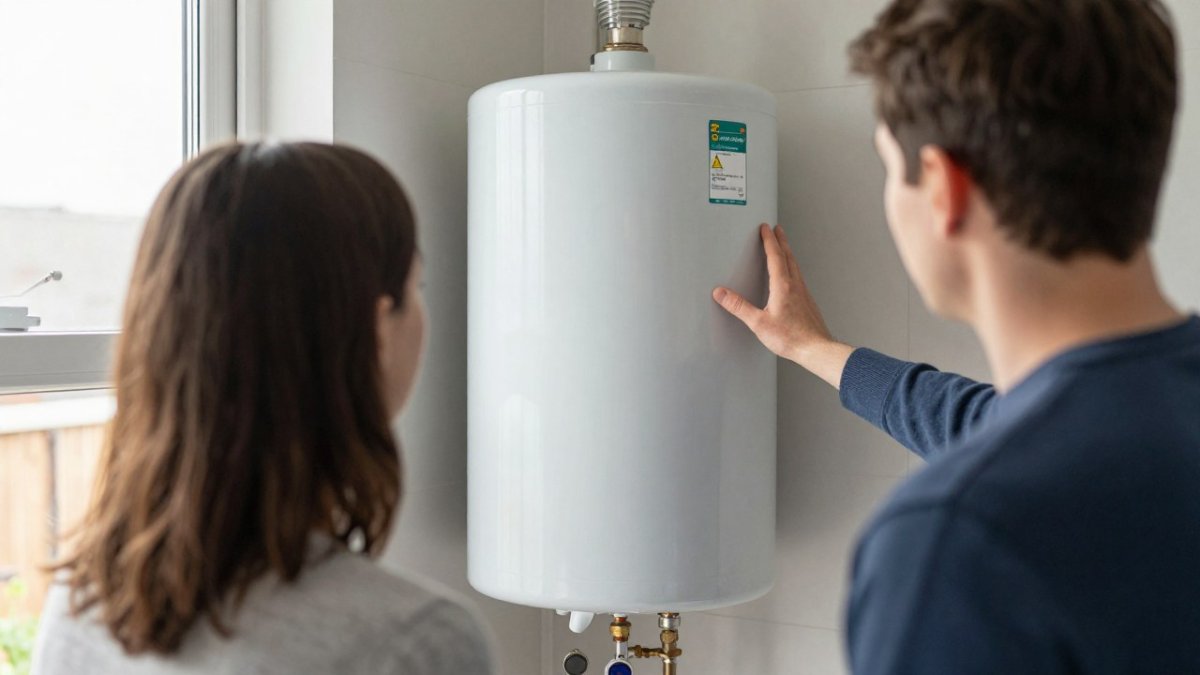
A system boiler heats water and stores it in a hot-water cylinder, usually in an airing cupboard. The boiler pressurises the central heating and the cylinder, so there is no cold-water storage tank in the loft. Hot water is drawn from the cylinder on demand, and the boiler reheats it afterwards.
That stored hot water is the system boiler's advantage. Cylinder capacity determines how much hot water is ready at once, so a larger cylinder can serve two bathrooms together without the pressure drop a combi shows. The cost is recovery time: once the cylinder empties, you wait for it to reheat before the next long shower.
Combi vs System Boiler Pros and Cons at a Glance
The combi vs system boiler pros and cons table below gives the short version. Use it to narrow the choice, then confirm with an installer assessment.
| Factor | Combi Boiler | System Boiler |
|---|---|---|
| Hot water | On-demand, no storage | Stored in a cylinder |
| Multiple outlets | Weak under simultaneous demand | Strong with adequate cylinder |
| Space needed | No cylinder or tank | Cylinder plus airing cupboard |
| Reheat time | Instant | Cylinder recovery delay |
| Best for | Smaller households, one bathroom | Families, two or more bathrooms |
For a fuller breakdown of manufacturers and models that fit each type, our boiler brand guide covers the ranges we install.
Hot-Water Performance: Peak Demand and Simultaneous Outlets
Peak demand is the real test, and it is where the two types separate. A combi boiler's hot-water flow rate is fixed by its output. Two outlets open together share that output, so the shower weakens when someone runs a hot tap downstairs.
A system boiler draws from stored hot water, so simultaneous outlets each get full pressure until the cylinder runs low. Cylinder capacity and reheat time set the limit, not the boiler's output. If your household has a morning rush with two showers and a sink running at once, stored hot water handles it better. If everyone showers at different times, a combi's on-demand supply is simpler and wastes less heat.
If your hot water has already stopped working properly, our hot water repair service covers diagnosis and fixes before you commit to a replacement.
Combi Boiler for Multiple Bathrooms: Where It Works and Where It Struggles
A combi boiler can serve a home with more than one bathroom, but only under the right conditions. It works when those bathrooms are rarely used at the same time, when mains pressure is strong, and when the boiler's output is sized generously for the outlets it feeds.
It struggles when two showers run together, when mains pressure is low, or when a large family all gets ready in the same hour. In those homes the pressure drop is noticeable and the fix is not a bigger combi alone. It is usually a system boiler with a suitably sized cylinder. We assess the outlets and the mains supply before recommending either, and our combi boiler service explains what we check.
Sizing the System Boiler Hot Water Cylinder to Your Household
Cylinder capacity drives system boiler performance, so sizing matters more than the boiler's badge. A cylinder that is too small empties during the morning rush. One that is too large wastes energy keeping unused water hot.
The right size follows household size and bathroom count. A single-bathroom home needs less stored hot water than a family with two bathrooms and a busy routine. Boiler sizing also depends on heat loss from the property, not just the number of radiators. An installer assessment measures both, then matches cylinder capacity and boiler output to the home. Guessing at cylinder size is a common cause of cold showers.
Combi vs System Boiler Running Costs and Whole-Life Cost
Combi vs system boiler running costs depend on how the home uses hot water. A combi avoids standing heat loss because nothing is stored, which can suit homes that use hot water in short bursts. A system boiler keeps a cylinder hot, which adds standing loss but delivers hot water during heavy simultaneous use.
| Cost element | Combi boiler | System boiler |
|---|---|---|
| Boiler and cylinder purchase | £1,200-£2,500 for the boiler | £1,200-£2,500 for the boiler plus £600-£1,200 for a cylinder |
| Installation labour and materials | £800-£1,500 | £1,200-£2,200 (cylinder, pipework, controls) |
| Annual servicing | £80-£120 | £100-£160 (boiler plus cylinder) |
| Cylinder-related maintenance over 15 years | None | £300-£800 (expansion vessel, immersion backup, scale treatment) |
| Standing heat loss from stored water | None | Roughly £50-£150 a year depending on cylinder insulation and setpoint |
| Replacement parts over 15 years | £400-£900 | £500-£1,100 |
Three assumptions sit behind those ranges. First, energy prices are volatile, so the standing-loss figure uses a mid-range unit rate and a cylinder maintained at around 60°C. Second, servicing assumes an annual Gas Safe registered visit for both types. Third, the fifteen-year horizon reflects a typical boiler lifespan, with the cylinder often outlasting the boiler.
The cheaper option over fifteen years is generally the one matched to a household's routine. A family that runs two showers and a hot tap simultaneously every morning will recover the system boiler's higher upfront and servicing cost through better hot-water delivery and fewer behavioural workarounds, such as staggered shower times. Our boiler replacement service sets out the options and next steps once you have a shortlist.
Combi vs system boiler cost elements
Low Mains Pressure, Future Upgrades and the Installer Assessment
Low mains pressure changes the decision, and it is the point where many homeowners receive misleading advice. A combi relies on mains pressure to deliver hot water, so weak incoming flow means weak showers regardless of boiler size.
A household that replaces a struggling combi with a system boiler may still see weak showers if the incoming flow rate is not measured first. A qualified installer should check the static and dynamic mains pressure, the flow rate in litres per minute at the outside tap, the internal pipe diameter from the stopcock, and whether the supply is shared or lead-fed.
Future changes matter too, and they are where a short-term choice becomes expensive. A loft conversion, an extra bathroom, a growing family, or improved insulation all shift hot-water demand and heat loss. Choosing a system boiler with spare cylinder capacity now can avoid a second replacement later, while a combi sized only for today's outlets may need replacing if a second bathroom is added.
An installer assessment should therefore cover four things: a room-by-room heat-loss calculation to size boiler output, a hot-water demand estimate based on outlet count and household routine, a cylinder capacity recommendation where a system boiler is proposed, and a written record of the mains pressure and flow checks. A Gas Safe registered engineer should confirm the final specification, as the Gas Safe Register sets the competence standard for this work. Ask for those figures in writing before you commit, because a recommendation without them is a guess.
Book a Boiler Suitability Assessment
The combi vs system boiler choice is settled by your home, not by a general rule. Mains flow, bathroom count, household routine, and future plans all point one way or the other, and an assessment confirms it before you spend.
Central Heating Scotland provides Gas Safe registered engineers across Glasgow and West Scotland for boiler installation, replacement, and servicing. We fit leading brands including Worcester Bosch, Vaillant, Ideal, Vokera, and Alpha, and support landlord compliance with CP12 certificates. Get started with Central Heating Scotland and book a new boiler installation with an assessment that matches the system to how your family actually lives.
The wrong boiler type shows up as cold showers and wasted money within the first winter. Before you commit, have your mains flow and hot-water demand checked by a Gas Safe registered engineer. Central Heating Scotland sizes combi and system boilers to the household, fits leading brands, and handles installation, servicing, and landlord certification. Get started with Central Heating Scotland and choose a boiler that fits your family's routine.
Frequently Asked Questions
Is a combi or system boiler better for a family home?
It depends on how many outlets your family uses at once. A combi vs system boiler decision usually comes down to bathrooms and morning routines. A combi heats water on demand and suits one-bathroom homes with good mains flow. A system boiler with a hot water cylinder stores water so two showers and a tap can run together. Your mains pressure, bathroom count and peak demand will help determine which suits you best.
Can a combi boiler supply hot water to two bathrooms at once?
A combi boiler for multiple bathrooms can work, but output and mains flow rate decide how well. Running two showers simultaneously splits the available flow, so pressure at each outlet drops. In practice, a combi handles one shower plus a sink comfortably, while two showers at once often disappoint. Homes with two or more bathrooms usually get more reliable results from a stored hot-water system.
Does a system boiler need a hot water cylinder?
Yes. A system boiler works with a hot water cylinder and a cold-water storage tank, though it takes its cold feed from the mains rather than a loft tank. The cylinder stores hot water ready for peak demand. Cylinder capacity should match household size: too small and it runs cold before the last person showers, too large and you pay to heat water you never use.
Which is cheaper to run, a combi or system boiler?
Combi vs system boiler running costs depend on usage patterns rather than one being cheaper outright. A combi avoids standing losses from a cylinder because it heats water only when a tap opens, which suits smaller households. A system boiler reheats a full cylinder, so a large family drawing water several times a day can use it efficiently. Both should be sized correctly and paired with good heating controls.
Can you replace a system boiler with a combi boiler?
Often yes, but the swap is not automatic. A combi needs adequate mains pressure and flow, and the old cylinder and tanks are removed to free up the airing cupboard. Pipework, gas supply and radiator sizing should be checked first. If your mains flow is low or you have multiple bathrooms, keeping a stored hot-water system may serve the family better. Ask for an honest assessment before committing.