 how-to
How to Check a Gas Safe Engineer: Verification Steps
Table of Contents
- Why Checking a Gas Safe Engineer Matters
- Step 1: Use the Gas Safe Register Engineer Search
- Step 2: Request and Inspect the Gas Safe ID Card
- Step 3: Check Gas Safe Engineer Qualifications and Work Categories
- Step 4: Verify the Gas Safety Certificate Online
- Creating Your Pre-Work Verification Checklist
- What to Do If Details Don't Match or Registration Cannot Be Verified
- Frequently Asked Questions
Last Updated: October 21, 2026
Why Checking a Gas Safe Engineer Matters
Your heating system is critical, and not all engineers are equally qualified or trustworthy. Choosing the wrong one risks your safety and wastes your money.
That's why you should check Gas Safe engineer credentials before hiring, it's essential.
At Central Heating Scotland, we work with Gas Safe registered engineers daily.
Step 1: Use the Gas Safe Register Engineer Search
The Gas Safe Register is the official, constantly updated database of all qualified engineers, free to search online in seconds. Visit the official Gas Safe Register website and use the "Find an Engineer" tool. You have three main ways to search.
Searching by engineer name or licence number
Enter the engineer's full name and check the licence number matches what they told you. A seven-digit licence number is unique to each engineer and appears on their Gas Safe ID card. If you have it, search by number instead, it's faster and more accurate than a name search.
The register shows:
- Full name and photo
- Current registration status
- Licence expiry date
Searching by business name or registration number
Many engineers work for heating companies, so search by business name instead. Enter the company name to see all engineers working for that business, verifying the whole team is registered, not just one person. Each registered business also has a registration number, if the company gave you this, use it to confirm the business itself is legitimate.
Finding a local engineer by postcode
Enter your postcode to see all registered engineers and businesses in your area, with contact details and specialties. This is useful for finding backup options close to home when your regular engineer is unavailable.
Step 2: Request and Inspect the Gas Safe ID Card
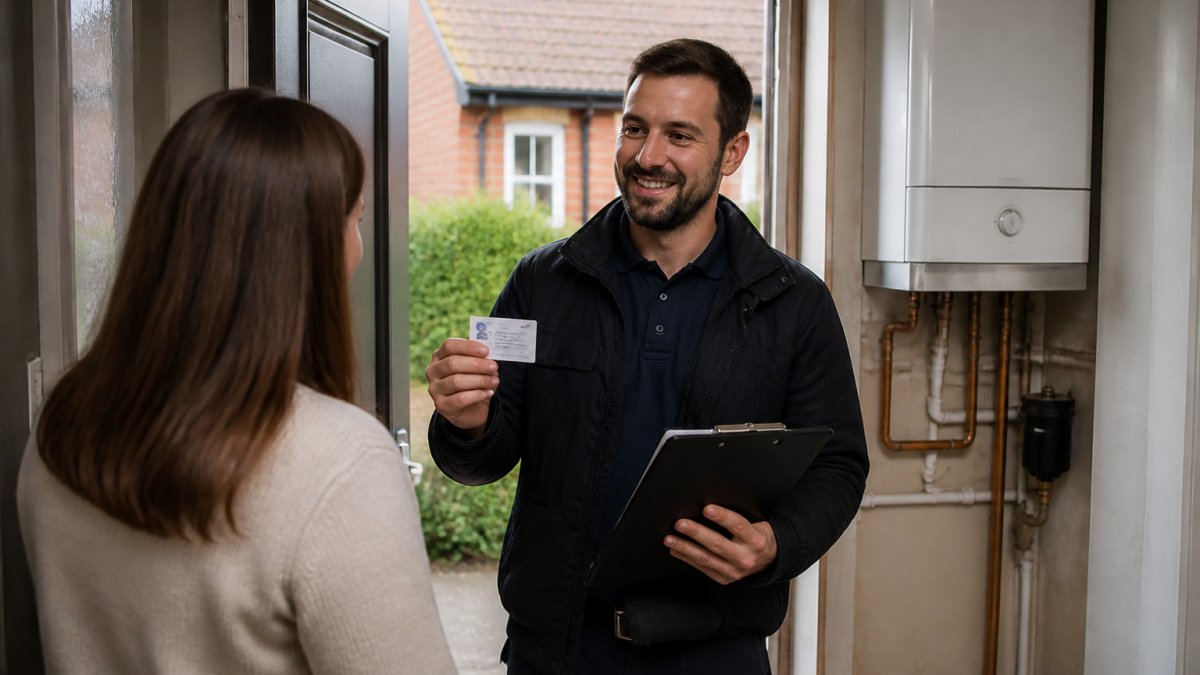
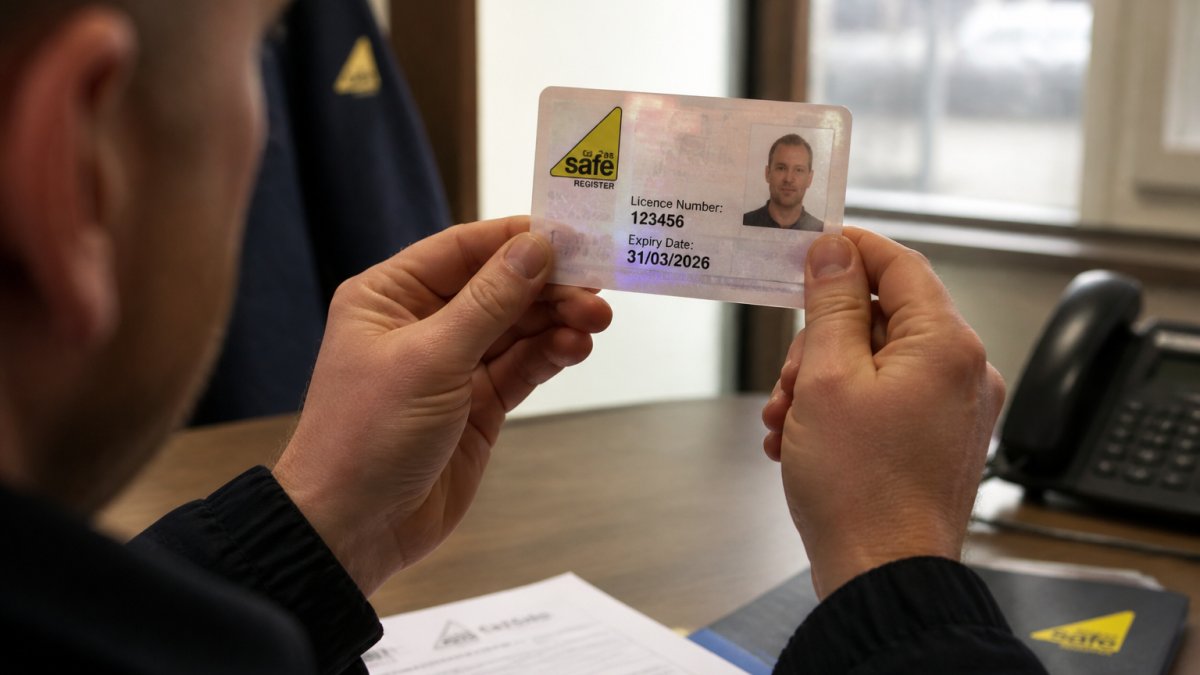
Every registered engineer carries a Gas Safe ID card as proof of qualification. Always ask to see it before work starts, and check its security features carefully.
What to look for on the card
The card shows the engineer's name, photo, licence number, and work categories. The expiry date must be current, if it has expired, the engineer is no longer registered.
Look for these security features:
- A hologram that changes when you tilt the card
- UV printing that glows under ultraviolet light
- A QR code linking to the Gas Safe Register
A fake or altered card is easy to spot if you know what to look for: specific colours, consistent font, and a hologram that's difficult to copy.
Verifying the photo and personal details
Compare the photo on the card to the person in front of you, if it doesn't match clearly, do not let them proceed. Check the name matches what they introduced themselves as; a mismatch is a red flag. Search the Gas Safe Register again using the licence number on the card and confirm the online record matches.
Step 3: Check Gas Safe Engineer Qualifications and Work Categories
Registration alone isn't enough. Match the engineer's listed work categories to your specific job, not just confirm they appear on the register.
What work categories actually are
Gas Safe registration is not a blanket qualification. Each engineer is assessed against specific areas of gas work, recorded as short descriptors covering things like:
- Domestic gas boilers (installation, servicing, or both)
- Gas cookers and hobs
- Landlord gas safety inspections (CP12)
An engineer can be qualified for one category and not another, for example, servicing boilers but not installing them, or working on domestic appliances but not commercial ones.
How to read the categories on the card and register
On the physical ID card, work categories appear as a short list or coded descriptors; on the online register entry, the same categories are shown in full. The two must agree.
When you look at either, ask three questions:
- Does the category cover the appliance type? A boiler is not the same as a gas fire. A combi boiler is not the same as a back boiler. Match the appliance, not just the word "gas".
- Does the category cover the task? Installation, servicing, repair, and safety inspection are different activities. If you need a replacement, the engineer must be qualified for installation, not only servicing.
- Is there any restriction noted? The register can show restrictions or conditions on a licence. Read them. A restriction may limit the engineer to certain appliance makes, certain premises, or certain types of work.
Matching the category to your job, worked examples
- Boiler replacement: You need an engineer whose categories include domestic boiler installation. Servicing-only registration is not enough, even if the engineer has serviced the same boiler for years.
- Annual landlord check: You need an engineer qualified to carry out landlord gas safety inspections and issue a CP12. Not every registered engineer carries this category.
- Gas hob installation: The engineer must be qualified for the appliance type and for installation. Fitting a hob is not covered by boiler servicing registration.
Ask before you book
A short, direct question saves a wasted visit: "Are you qualified to install [appliance] at my property, and is that category showing on your Gas Safe record?" A genuine engineer will answer without hesitation and point you to the category. If the answer is vague, or they say registration covers everything, treat that as a warning sign and check the register entry yourself.
Additional qualifications worth asking about
Some engineers hold qualifications beyond core gas registration, unvented hot water systems, oil firing, or solid fuel. These aren't required for every job, but may be essential for yours. Ask directly and cross-check against the register entry rather than assuming.
Gas Safe Register, find or check an engineer
Step 4: Verify the Gas Safety Certificate Online
After work is complete, you'll receive a gas safety certificate, a legal requirement for landlords and proof of safe work for homeowners. The certificate should show:
- The engineer's name and licence number
- The work performed
- Any faults found or remedied
Keep this certificate, you may need it for insurance claims or if you sell your property. For landlords, the Landlord Gas Safety Record (CP12) is mandatory and must be issued within 12 months of the inspection, confirming all gas appliances in the rental are safe. Some certificates can be verified online through the Gas Safe Register: enter the certificate reference number to confirm it's genuine.
Creating Your Pre-Work Verification Checklist
Before any engineer enters your home, work through this checklist. It takes five minutes and prevents problems.
Before the engineer arrives:
- Search the Gas Safe Register using their name or licence number
- Confirm their registration status shows as current
- Note their work categories and confirm they cover your job
When the engineer arrives:
- Ask to see their Gas Safe ID card
- Compare the photo to their face
- Verify the name and licence number match the online record
After the work is done:
- Request a written gas safety certificate
- Check the certificate includes the engineer's licence number
- Ask for the certificate reference number
This checklist takes the guesswork out of hiring. You're not relying on trust alone. You're verifying facts.
What to Do If Details Don't Match or Registration Cannot Be Verified
Sometimes things don't add up: the name on the card doesn't match the register, the engineer can't be found at all, or the card looks wrong. A practical sequence matters more than general reassurance.
First: pause the work
Do not let the engineer begin or continue gas work until the discrepancy is resolved. This isn't about being rude, it's about safety and keeping your insurance and any warranty valid. A genuine engineer will understand and wait while you check.
Second: record what you have seen
Before you contact anyone, note down:
- The engineer's name as given verbally
- The name and licence number on the card
- The business name and any registration number quoted
This record is what the register and, if needed, the police will ask for. Without it, a report is much harder to act on.
Third: work through the likely explanations in order
Most mismatches have an ordinary explanation. Check these before assuming fraud:
- Recent name change. Marriage, divorce, or a legal name change can leave the card and register briefly out of step. Ask the engineer to confirm their licence number, that number does not change with a name.
- Business versus individual. The company may be registered while the individual is not, or the individual may be registered under a different trading name. Search both the person and the business.
- Expired but renewing. Registration can lapse while a renewal is processed. An expired card still means the engineer is not currently registered, do not proceed, but it is not necessarily impersonation.
- Wrong card produced. An engineer may have picked up a colleague's card by mistake. The photo and name check should catch this. If it does, ask for the correct card and re-check.
Fourth: contact the register through official channels
If the explanations don't hold, contact the Gas Safe Register directly using the contact details published on its own website. Do not rely on a phone number printed on the card itself, a fake card can carry a fake number. Describe the engineer, the licence number, and what you observed.
Fifth: decide whether to proceed
- Register confirms the engineer and the details match: you can proceed. Note the confirmation.
- Register confirms the engineer but a detail differs (for example, a name change in progress): ask the engineer to explain and, if satisfied, proceed only for work within their confirmed categories.
- Register cannot find the engineer, or the licence number does not exist: do not proceed. The engineer is not registered and cannot legally carry out gas work.
Reporting suspected impersonation
If you believe someone is posing as a registered engineer, report it to the Gas Safe Register. Provide the record you made in step two. The register investigates reports of illegal gas work and can involve the relevant enforcement bodies. Keep your own copy of the report reference.
What not to do
- Do not accept a photograph of a card sent by message as proof. Photographs are easily copied and altered. Check the physical card and the register entry.
- Do not accept a company registration number as proof that the individual is qualified. A business can be registered while the person at your door is not.
- Do not accept a gas safety certificate from a previous job as proof of current registration. Certificates show past work, not present status.
Central Heating Scotland's Gas Safe registered engineers are fully qualified and current. We maintain our registrations and carry valid ID cards. If you ever have questions about our credentials, ask to see our card or search us on the Gas Safe Register.
Frequently Asked Questions
How do I check whether a gas engineer is Gas Safe registered?
Visit the official Gas Safe Register website and use their online search tool. You can search by the engineer's name, seven-digit licence number, business name, or registration number. Enter the details and the register will confirm whether they are currently registered. You can also call the Gas Safe Register's freephone number for verification. Always ask the engineer for their licence number before work begins.
What should I check on a Gas Safe ID card?
Verify the engineer's photograph matches the person in front of you. Check that the licence number on the card matches the register search result. Confirm the expiry date has not passed. Look for the QR code on the back, which you can scan to verify registration status. The card should display the work categories they are qualified to carry out, ensure these cover the gas work you need done.
Does a Gas Safe engineer need to be qualified for my specific appliance?
Yes. Gas Safe registration covers different work categories: boiler installation, central heating, cookers, and other appliances. An engineer registered for boiler work may not be qualified for gas cooker installation. Check the work categories listed on their ID card or in the register search result. Confirm their qualifications match the exact type of gas work or appliance you need serviced.
What should I do if I cannot verify an engineer's registration?
Do not proceed with the work. Contact the Gas Safe Register directly using their freephone number to confirm the engineer's status. Ask the engineer to provide their licence number and business registration details. If they cannot provide these or the register shows no record, find a different registered engineer. For landlords, unregistered work voids your Landlord Gas Safety Record and creates legal liability.
Checking a Gas Safe engineer protects your home and your wallet. It's not about being suspicious. It's about being smart. The Gas Safe Register exists for your benefit. Use it before every job. Central Heating Scotland makes this easy by maintaining full Gas Safe registration across our entire team and providing transparent verification. Get started with a verified, registered engineer and know your heating system is in safe hands.