 ultimate-guide
The Complete Guide to Boiler Installation Costs
Last Updated: October 26, 2026
Quick Summary
Boiler installation cost depends primarily on the boiler type you choose, your property's existing heating infrastructure, and any complications discovered during installation. Most boiler replacements take one to two days, with labour costs varying based on the engineer's time and expertise required for your specific property.
- Combi boilers typically offer the simplest and most cost-effective installation because they require less pipework modification than system or conventional boilers
- System boiler installations cost more than combi systems because they require a separate unvented cylinder and more complex pipework work
- Moving a boiler to a different location significantly increases costs due to pipework reconfiguration, flue relocation, and building regulation compliance requirements
- Request quotes from at least three Gas Safe registered engineers to establish a realistic price range for your specific property and circumstances
- Finance options including payment plans, interest-free credit, and government grants can help manage the upfront cost of boiler installation
Table of Contents
- What Affects Boiler Installation Cost
- Combi Boiler Installation Cost Explained
- System Boiler Installation Cost Breakdown
- Conventional Boiler Installation Costs
- Cost to Move a Boiler to a Different Location
- Boiler Installation Time and Labour Costs
- Finance Options and Grants for Your New Boiler
- Getting an Accurate Boiler Installation Quote
- Frequently Asked Questions
What Affects Boiler Installation Cost
The boiler installation cost depends on several interconnected factors that vary significantly from one property to another.
The boiler type you choose is the primary cost driver. A combi boiler, system boiler, and conventional boiler each require different installation approaches, pipework configurations, and control systems. Beyond the boiler itself, your property's existing heating infrastructure matters enormously.
Property-specific complications add significant expense. Older properties with outdated pipework layouts, difficult access to the boiler location, or complex flue routes require more time and expertise.
Installation time is another critical factor. Explore when repair or replacement makes sense to help decide between fixing an old boiler and installing a new one.
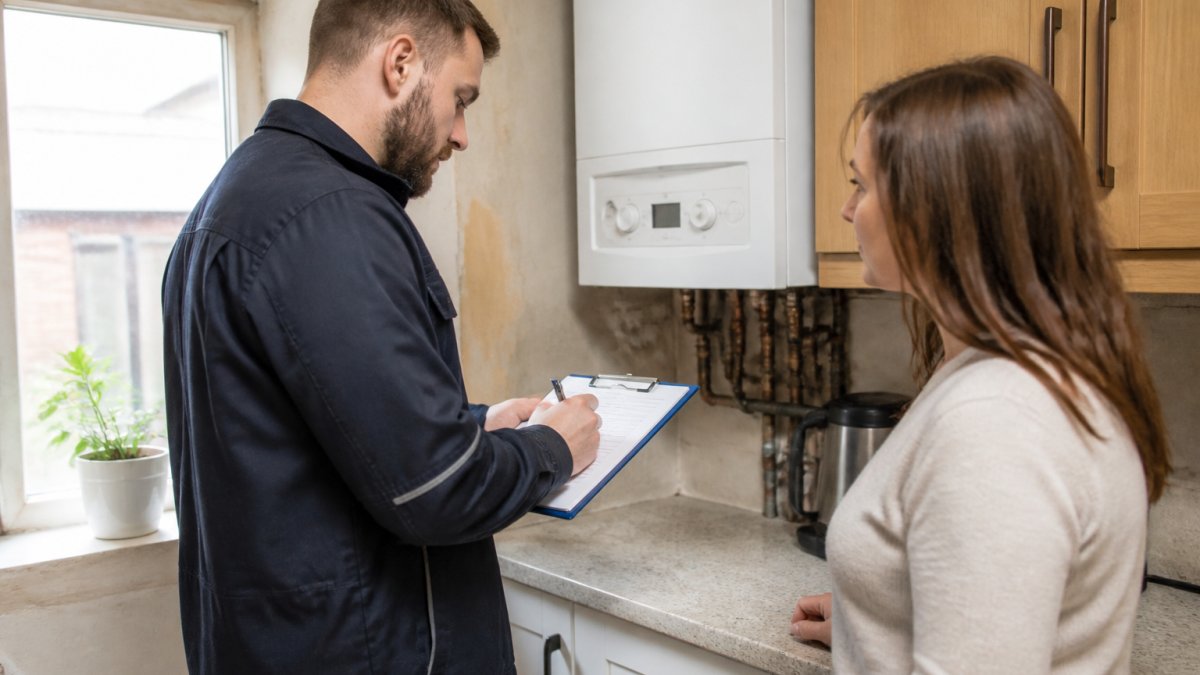
Several key factors determine how much your boiler installation will cost.
| Factor | Impact on Cost | Note |
|---|---|---|
| Boiler type | Primary cost driver | Combi, system, and conventional require different approaches |
| Existing pipework compatibility | Substantial variation | Compatible systems reduce labour; reconfiguration increases costs |
| Property age and access | Significant expense | Older properties with difficult access cost more |
| Installation time | Direct cost increase | Most replacements take one to two days; complex work extends to three or four days |
| Complications discovered | Additional charges | Corroded pipework or faulty flues trigger extra costs |
Combi Boiler Installation Cost Explained
A combi boiler installation cost typically reflects the simplest installation scenario because these units combine heating and hot water in one compact appliance. Combi boilers don't require a separate hot water cylinder or cold water tank, which means less pipework modification and faster installation for many properties.
The appeal of combi boilers lies in their space efficiency and lower installation complexity in suitable properties. If your home already has a combi boiler or was designed with one in mind, the labour costs remain relatively modest.
Combi boilers work best in properties with good water pressure and homes where hot water demand is moderate. Flats with mains pressure and smaller households see the most cost-effective installations.
The boiler unit itself represents only part of the expense. Controls, thermostats, and integration with smart heating systems like Hive add value but also cost. Most modern installations now include a programmable thermostat as standard, but upgrading to a smart thermostat with remote control capability incurs additional charges.
System Boiler Installation Cost Breakdown
A system boiler installation cost sits between combi and conventional boilers because these units require a separate hot water cylinder but no cold water tank in the loft.
The installation process involves connecting the boiler to an unvented cylinder, which stores hot water under pressure. This configuration requires more pipework than a combi installation but less than a conventional system. The cylinder itself represents a substantial part of the total cost, and its installation demands specialist knowledge.
System boiler installations typically take longer than combi installations because of the cylinder work involved. If your existing cylinder is compatible and in good condition, costs reduce. If the old cylinder needs replacement, common in older properties, budget accordingly.
Properties with multiple bathrooms and high simultaneous hot water demand benefit most from system boilers. The stored hot water capacity means several taps or showers can run simultaneously without the water temperature dropping.
Conventional Boiler Installation Costs
A conventional boiler installation represents the most complex and costly scenario because these systems require a boiler, a separate hot water cylinder, and a cold water tank in the loft.
The boiler installation cost for a conventional system reflects the additional components and pipework involved. If your home already has the tank and cylinder infrastructure, replacement is more straightforward. If components need installing from scratch, removing old systems or upgrading a property without existing tanks, costs increase significantly.
System flush requirements are particularly important in conventional installations because sludge and debris accumulate over decades in older systems. A thorough flush before connecting the new boiler prevents damage and ensures efficient operation. This additional work, whilst essential for system longevity, adds to the overall boiler installation cost.
Conventional boilers are gradually being phased out in new installations because they're less efficient than modern alternatives. However, some properties, particularly older homes with low mains pressure or those requiring multiple hot water outlets, still rely on them.
Cost to Move a Boiler to a Different Location
The cost to move a boiler varies dramatically depending on how far you're relocating it and what modifications the new location requires. Moving a boiler within the same room costs far less than relocating it to a different floor or to an external wall.
The primary expense comes from extending or reconfiguring pipework. If the new location is close to existing pipework routes, costs remain modest. If the boiler moves to a distant part of the property, new copper pipework must be installed throughout, which is labour-intensive and material-heavy.
External wall relocation triggers additional work. Cutting through external walls, installing a new flue terminal, and ensuring proper weatherproofing and building regulation compliance all add expense.
Building regulations approval is mandatory for boiler relocation. The installation must comply with current standards for ventilation, flue positioning, and safety clearances. A Gas Safe registered engineer ensures compliance, but any remedial work required to meet regulations increases costs further.
Boiler Installation Time and Labour Costs
Boiler installation time typically spans one to two days for straightforward replacements, though complex installations extend to three or four days. The labour cost component of your total boiler installation cost depends directly on how long the work takes and the engineer's hourly rate.
A standard combi boiler replacement in a modern property with compatible pipework might take eight to ten hours, often completed in a single day. System boiler installations, which involve cylinder work and more complex plumbing, typically require a full day and often a second half-day. Conventional boiler installations or complex system conversions regularly extend to two full days or more.
The engineer's expertise influences both time and cost. A highly experienced Gas Safe registered engineer completes routine work efficiently, which can reduce labour hours. However, when complications arise, corroded pipework requiring replacement, poor access forcing alternative installation methods, or building regulation issues, even experienced engineers need additional time.
Boiler installation labour costs also reflect the engineer's travel time to your property, site preparation, system flushing, testing, and handover. A comprehensive installation includes pressure testing, safety checks, control system programming, and customer instruction on operating the new system. These elements, whilst essential, extend the working day beyond the core boiler installation itself.
Finance Options and Grants for Your New Boiler
Several finance routes help manage the upfront cost of a new boiler installation. Many heating engineers offer payment plans that spread costs over 12, 24, or 36 months, reducing the immediate financial burden.
Government grants and energy efficiency schemes occasionally support boiler replacement, particularly for low-income households or when upgrading to high-efficiency models. Eligibility varies by scheme and changes annually, so checking current government guidance is essential.
Interest-free credit options are available through specialist lenders, allowing you to finance the boiler installation cost without paying interest over the agreed term. Learn about annual boiler service costs to understand long-term maintenance expenses after installation.
Landlords should note that boiler replacement costs may be offset against rental income for tax purposes, though professional accountancy advice is recommended. The UK government guidance on landlord tax relief provides details on what counts as a deductible expense.
For properties with solid fuel or oil heating, switching to a gas boiler installation may qualify for energy efficiency grants under current government schemes if the property meets eligibility criteria.
Citizens Advice guidance on energy bills and heating support outlines additional support available to households struggling with heating costs, including emergency support schemes.
Getting an Accurate Boiler Installation Quote
An accurate boiler installation quote breaks down labour, materials, and any additional work required. You can book a new boiler installation service to get started with a professional assessment.
When requesting quotes, provide consistent information to each engineer: your property type, current boiler type, preferred new boiler type, and any specific requirements such as smart thermostat integration.
Watch out: quotes that seem unusually low compared to others may exclude essential work like system flushing or building regulation certification. These omissions create problems later, poor heating performance or regulatory non-compliance.
Our Gas Safe registered engineers visit your property, assess your heating system comprehensively, and provide itemised quotes that specify exactly what's included and what additional costs might arise.
Request quotes from at least three engineers to establish a realistic price range for your specific property and circumstances. You can also explore boiler replacement as an alternative service option. Compare not just the total cost but what each quote includes. The cheapest quote isn't always the best value if it excludes essential work or comes from an engineer with limited experience in your property type.
Getting a new boiler installed is one of the larger home maintenance expenses most property owners face.
Frequently Asked Questions
What does boiler installation cost on average?
Boiler installation cost depends on the boiler type, your property's heating system configuration, and the complexity of the work required. A combi boiler installation typically costs less than a system boiler replacement because it requires fewer components. Labour costs, pipework modifications, flue work, and removal of your old boiler all factor into the final price. For an accurate figure, you need a site survey from a Gas Safe registered installer who can assess your specific heating system and property layout.
Is combi boiler installation cheaper than system boiler installation?
Generally, combi boiler installation is less expensive than system boiler installation because a combi boiler eliminates the need for a separate hot water cylinder and storage tank. However, if your property currently has a system boiler, converting to a combi may involve additional pipework and flue modifications, which can increase labour costs. The final price depends on your existing central heating setup, the boiler brand you choose, and whether any structural changes are needed.
What is included in a boiler installation quote?
A transparent boiler installation quote should itemise the boiler unit cost, labour and installation fees, removal and disposal of your old boiler, system flush (to clear debris from pipework), flue work, any necessary controls or thermostats, and VAT. Some quotes may also include first-year servicing or a warranty extension. Always ask your installer to break down each element so you understand exactly what you're paying for and can spot any hidden extras.
How long does boiler installation take?
A straightforward boiler installation typically takes one to two days. A like-for-like replacement (same boiler type in the same location) is usually faster. If you're changing boiler type, relocating your boiler, upgrading your heating system, or your property has complex pipework, installation may take longer. Your Gas Safe registered engineer should give you a realistic timescale during the survey so you can plan for any disruption to your heating and hot water.
What affects the cost of installing a new boiler?
Key cost factors include the boiler type (commi, system, or conventional), boiler brand and efficiency rating, whether you're replacing like-for-like or changing system type, the age and condition of your existing pipework, flue routing and modifications needed, removal and disposal of your old boiler, system flushing requirements, and the complexity of your property's heating layout. Properties requiring additional pipework, new controls, or extensive flue work will cost more than straightforward replacements.
Can I get help paying for a new boiler installation?
Several support options may be available depending on your circumstances. The Boiler Upgrade Scheme offers grants towards heat pump installations as an alternative to gas boilers. Some energy suppliers run support schemes for vulnerable households. If you're a landlord, you can offset boiler replacement costs against your rental income for tax purposes. Contact your installer or local authority to check what funding you may qualify for.