 how-to
7 Steps to Boiler Replacement in Glasgow
Last Updated: November 2, 2026
Quick Summary
Boiler replacement in Glasgow starts with a survey, because pricing depends on your property, the boiler type and the extras your installer includes. A fixed-price quote should itemise the boiler model, output, flue position, controls, flush, filter, labour, certification and VAT separately so you can compare it.
- A straightforward combi swap is typically completed within a working day.
- A combi suits family homes with hot water demand spread across the day and good mains pressure.
- Replace when the boiler is past its expected life, repairs recur or parts are scarce.
- Confirm the installer is Gas Safe registered and check the ID card before booking.
- Ask whether a system flush and magnetic filter are included in the quote.
Table of Contents
- Boiler Replacement Cost in Glasgow: What Drives the Price
- Combi Boiler vs System Boiler for a Family Home
- Repair or Replace? How to Decide
- How Long Does Boiler Installation Take?
- Your Boiler Replacement Checklist
- Gas Safe Registration, Commissioning and Handover
- Book Your Boiler Replacement Survey
- Frequently Asked Questions
Boiler Replacement Cost in Glasgow: What Drives the Price
Boiler replacement in Glasgow starts with understanding what you're actually paying for. Pricing depends on your property, the boiler type, and the extras your installer includes, so no honest engineer quotes a figure before seeing the system. A quote should be based on a survey of your system rather than guesswork.
Labour, Parts and the Extras That Add Up
Three things move the number most: the boiler itself, the labour to fit it, and the extras that only appear once the old unit comes off the wall.
- Boiler and flue: brand, output and efficiency rating
- Labour: installation complexity, access, and whether the boiler moves position
- Extras: system flush, magnetic filter, new thermostat, upgraded controls
- Remedials: pipework corrections, gas supply upgrades, condensate routing
A like-for-like swap in a straightforward flat is a very different job from a conversion with a relocated flue. Ask for the extras to be itemised, not bundled into one vague total.
What a Fixed-Price Quote Should Include
A fixed-price quote should list the boiler model, output, flue position, controls, flush, filter, labour, certification and VAT separately. If it doesn't, you can't compare it to anything.
Check what is excluded from any quote before comparing the headline figure.
Combi Boiler vs System Boiler for a Family Home
For most family homes, a combi boiler is the right choice when hot-water demand is spread across the day and mains pressure is good. A system boiler suits larger households running several bathrooms at once, because it stores hot water in a cylinder and can serve multiple outlets without the pressure drop a combi shows when two taps run together.
Combi advantages: no tank or cylinder, instant hot water, less pipework, and lower standing losses for low-demand homes. System advantages: consistent pressure across multiple outlets, a stored reserve for simultaneous showers, and compatibility with solar thermal or heat-pump-ready cylinders. The trade-off is space and recovery time, a cylinder needs somewhere to live and reheats after heavy use.
Sizing a Boiler to Your Property
Boiler sizing is the process of matching output to your home's heat loss and hot-water demand, not its floor area alone. Oversized boilers cycle constantly, waste gas and wear components faster; undersized ones never keep up on cold mornings or when a second shower runs.
An engineer should work through four inputs rather than guess:
- Heat loss: count radiators and their output, check loft and wall insulation, note glazing and draughts, and factor in the property's exposure. A detached house with solid walls loses far more heat than a mid-terrace flat of the same floor area.
- Hot-water demand: ask how many people live there and how many shower or bathe at the same time. A combi's domestic hot-water output, often quoted in litres per minute at a 35°C rise, must cover the busiest outlet, not the average one.
- Flow rate and pressure: measure the incoming mains flow rate in litres per minute and static pressure. A combi is only as good as the supply feeding it; low flow rates suit a system boiler with a cylinder better.
- Existing pipework and emitter size: older microbore or undersized radiators may need upgrading to let a higher-output boiler deliver its rated heat. That remedial work belongs in the quote, not in a surprise variation.
Output then follows from those inputs, and output drives the price because larger boilers cost more and may need a gas supply upgrade. Output requirements vary by property, so only a survey can confirm the right figure.
If you're weighing this up, our combi boiler service explains what fitting one involves, and the survey is where the final output and price are confirmed.
Repair or Replace? How to Decide
Most boiler owners reach this question after a breakdown, not before, so the decision needs a framework rather than a slogan. Work through the four tests below in order; if two or more point to replacement, replacement is usually the better value.
Test 1: Age Against Expected Life
A well-maintained boiler can last many years, and service life depends on the model and how it is maintained. Age alone is not decisive, an annually serviced unit can outlast a neglected newer one, but once a boiler is past its expected life, every repair is buying time on borrowed equipment. Check the installation date on the commissioning record or the boiler's data plate rather than relying on memory.
Test 2: Repair Frequency and Cost
Add up what you have spent on repairs and parts over the last two or three years. If a single repair is approaching a meaningful share of a new installation, and the boiler is already old, replacement may be the better option. Repeated call-outs in one heating season are a stronger signal than any single bill, because they point to a system-level problem rather than one worn part.
Test 3: Parts Availability
Some manufacturers stop supplying parts for discontinued models, and obsolete or hard-to-source components can turn a simple fix into a wait of days or weeks without heating or hot water. Ask the engineer whether the part is readily available, whether it is genuine manufacturer stock, and how long the lead time is. If the answer is vague or the part is second-hand only, factor that risk into the decision.
Test 4: Efficiency and Running Cost
An old non-condensing boiler may run at a lower efficiency than a modern condensing unit, so part of the replacement cost is recovered through lower gas use over time. The saving depends on how much you heat, the property's insulation and current energy prices, so ask the installer to show the efficiency figures for the proposed model rather than quoting a blanket percentage. A replacement also brings a new warranty, which has real value if the old unit is out of cover.
A Simple Decision Path
- Repair when it is a single fault, the boiler is within its expected life, the part is readily available, and the unit is still under warranty or has years of reliable service left.
- Replace when the boiler is past its expected life, repairs are recurring, parts are scarce or costly, or the repair bill is a large fraction of a new installation.
- Get a second opinion when the advice is a straight "replace" with no diagnosis, or a repair quote that seems disproportionate to the fault.
Age matters, but reliability and parts support matter more. Ask for honest advice backed by a diagnosis, not a sales pitch. For a deeper look at the decision, read our guides on fault code repair versus replacement costs and old boiler fault codes and alternatives. When you're ready to move, our boiler replacement service sets out what's involved.
How Long Does Boiler Installation Take?
A straightforward combi swap is typically completed within a working day, while conversions, relocations or cylinder changes can take longer.
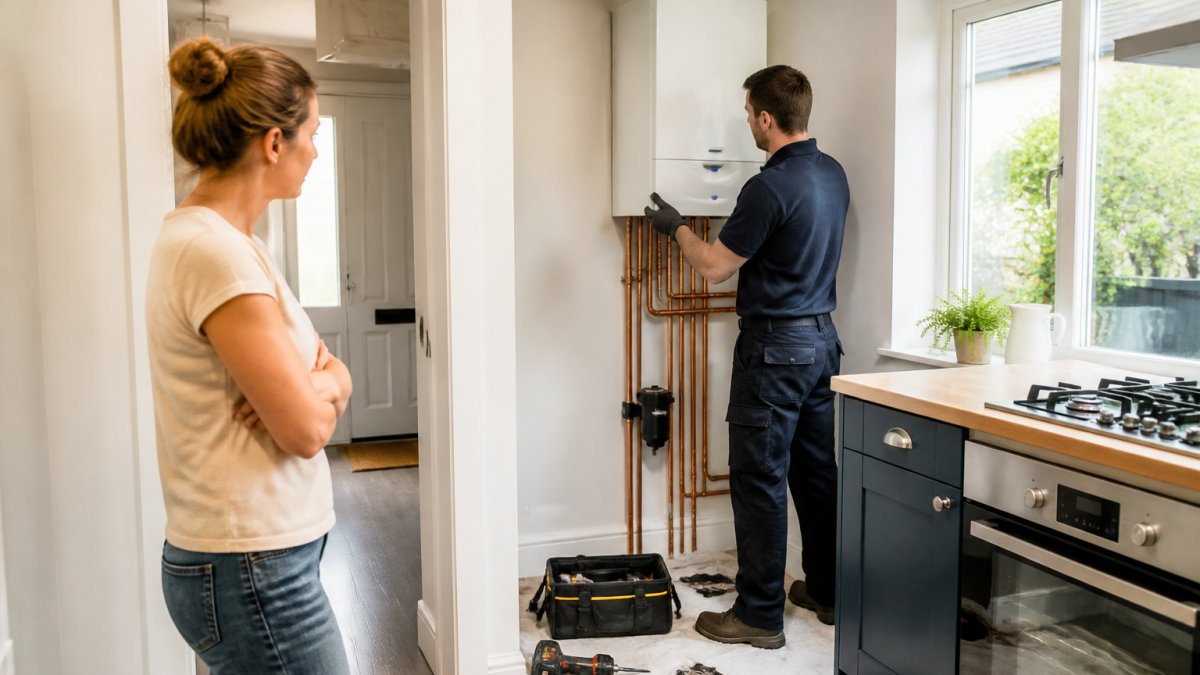
A typical installation involves protecting floors, isolating gas and water, removing the old unit, fitting the new one, flushing the system, and commissioning it. If someone promises a half-day for a full conversion, ask what they're skipping.
Your Boiler Replacement Checklist
Use this before you book, and again on the day:
- Confirm the installer is Gas Safe registered and check the ID card
- Get a written, itemised, fixed-price quote
- Confirm the boiler model, output and warranty length in writing
- Ask whether a system flush and magnetic filter are included
- Clear access to the boiler, loft and radiator valves
- Confirm the flue route and any permissions needed
- Ask what happens to the old boiler and packaging
- Keep the commissioning documents and warranty registration
| Stage | What to Check | Why It Matters |
|---|---|---|
| Quote | Itemised, fixed price | Prevents later add-ons |
| Installer | Gas Safe ID verified | Legal requirement |
| Install day | Floors protected, system flushed | Protects the warranty |
| Handover | Certificate and manuals | Proof of compliance |
Gas Safe Registration, Commissioning and Handover
Gas Safe registration is the legal requirement for anyone working on a gas appliance. You should ask to see an engineer's Gas Safe ID card.
Commissioning is the process of testing and setting up the new boiler so it runs safely and efficiently. Handover typically covers the controls, warranty and paperwork. Under Gas Safe Register rules, only registered engineers may legally work on gas appliances, and Building Regulations guidance covers the notification requirements for a replacement installation. Landlords should also note the landlord gas safety obligations that apply to rented property.
Book Your Boiler Replacement Survey
The survey is where the real number comes from. An engineer visits, inspects the existing system, checks the flue and gas supply, confirms the boiler position, and gives you a fixed price in writing.
You can arrange a survey through our team.
Frequently Asked Questions
How much does a boiler replacement cost?
The final figure depends on the boiler type, output, brand and how much pipework or flue work your property needs. A straightforward swap costs less than a conversion from a regular boiler to a combi, which may involve moving pipework and removing a tank. Always ask for a fixed-price quote in writing that lists what is included, such as a system flush, filter, thermostat and commissioning. Central Heating Scotland can give you a figure after a survey.
How long does boiler installation take?
Your installer should confirm the timescale before work starts and explain whether your heating and hot water will be off overnight.
Do I need to replace my radiators when I get a new boiler?
Not always. If your radiators heat evenly and show no leaks or corrosion, they can usually stay. A new boiler runs most efficiently with a clean system, so a system flush and magnetic filter are worth including in your boiler replacement checklist. If radiators are cold at the bottom or heavily sludged, replacing them may be the better long-term choice.
What should I check before choosing a boiler installer?
Confirm the engineer is Gas Safe registered and ask to see their ID card. Get a written quote that states inclusions and exclusions, check the manufacturer warranty terms, and ask for the commissioning certificate and building regulations notification at handover.
A replacement boiler is a decision you live with for years, so get the survey right before you commit. Central Heating Scotland provides Gas Safe registered engineers, same-day emergency repair, and full boiler installation across Glasgow and West Scotland, with landlord gas safety certification handled end to end. Get started with Central Heating Scotland and book a survey that gives you a fixed price before any work begins.