 how-to
Expert Boiler Installation and Repair for Property Development
Last Updated: November 5, 2026
Quick Summary
Expert boiler installation and repair for property development means using a Gas Safe registered contractor who plans across plots, phases work around build schedules, and supplies the documentation building control and future landlords require. Every plot needs a completed commissioning checklist and certificates before you accept it.
- Gas Safe registration is the legal baseline for anyone working on gas appliances.
- Time installations after dry trades and sequence second fix after kitchens are fitted.
- A missing Benchmark certificate can void the manufacturer warranty.
- Renew each Landlord Gas Safety Record every 12 months and give tenants a copy within 28 days.
- Set authorisation limits, such as £250 for property manager approval, to speed up minor repairs.
Table of Contents
- What Property Developers Need From a Heating Contractor
- Why Gas Safe Registration and Documentation Matter on a Development
- Boiler Installation Project Planning for Multi-Property Developments
- Combi Boiler vs System Boiler for a Family Home
- The Boiler Commissioning Checklist Every Developer Should Sign Off
- Boiler Repair for Landlords and Property Managers: Triage and Response
- Compliance, Costs and Approval Controls Across a Portfolio
- Choosing a Heating Partner for Your Next Development
- Frequently Asked Questions
What Property Developers Need From a Heating Contractor
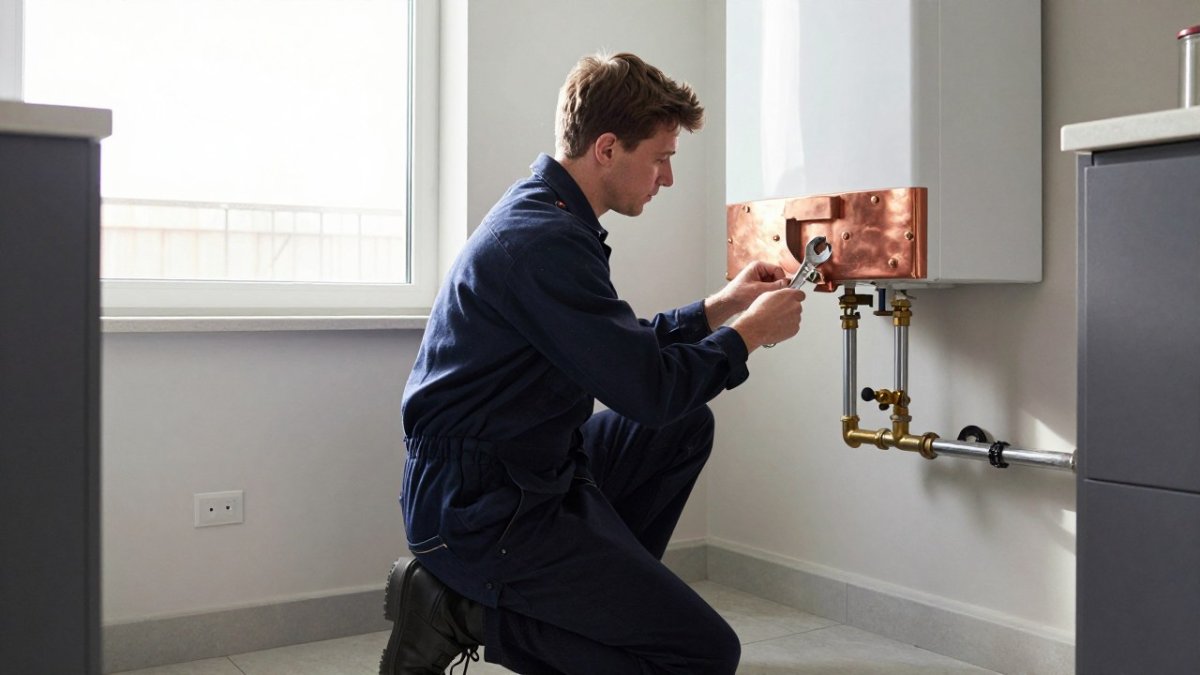
Expert boiler installation and repair for property development is not the same job as fitting a boiler in a single home. A developer needs a contractor who can plan across plots, phase work around build schedules, and produce documentation that satisfies building control and every future landlord. This guide from Central Heating Scotland sets out what that partnership should look like, from first fix to handover.
The core tension is simple. Build programmes reward speed, while gas work rewards patience and paperwork. A contractor who understands both keeps your completions on track. One who does not will cost you weeks.
Here is what most guides get wrong: they treat the heating contractor as a subcontractor to be managed, rather than a compliance partner whose sign-offs unlock your sale or let. Below, we break down planning, specification, commissioning and aftercare so you can brief and measure a heating partner properly.
Why Gas Safe Registration and Documentation Matter on a Development
Gas Safe registration is the legal baseline for anyone working on gas appliances. Registration is not a formality. It is the difference between a development that can be legally let and one that cannot.
Documentation is where developers get caught. Each property needs a record of the installation, commissioning data, and, for rented homes, a Landlord Gas Safety Record renewed annually. Missing paperwork stalls a sale or a tenancy and can trigger enforcement action. We handle these certificates as standard for property professionals, and you can see the full landlord safety check service that produces the records you sign off. The Gas Safe Register maintains the official register of qualified engineers, and it is worth verifying every card rather than trusting a logo on a van.
Boiler Installation Project Planning for Multi-Property Developments
Boiler installation project planning starts with a heat load and hot water demand calculation for each unit type, not a boiler picked from habit. Get that wrong and you inherit callbacks for years.
A workable plan covers four things:
- Unit-by-unit specification matched to occupancy and bathroom count
- Flue routes and condensate drainage confirmed before first fix
- Gas supply sizing checked against the total connected load
- A named engineer rota so no plot waits for a technician who is on another site
Phasing Installations Around Build Schedules
Phasing is where programmes succeed or slip. Installations are best timed to follow the dry trades, so boilers are not left in rooms before plastering finishes. Second fix is best sequenced after kitchens are fitted and before decoration, which helps protect the appliance. Build in a buffer for the commissioning slot, because a boiler that is fitted but not commissioned cannot be signed off, and an unsigned plot cannot complete.
Combi Boiler vs System Boiler for a Family Home
The combi boiler versus system boiler decision comes down to hot water demand, space, and how the property will be occupied. A combi heats water on demand from the mains and needs no cylinder, which suits smaller flats, one-bathroom homes, and properties where cupboard space is at a premium. A system boiler pairs with a stored cylinder and holds up better when several bathrooms run at once, making it the more reliable choice for family homes with two or more bathrooms.
For property developers, the decision should be made per unit type, not per development. A block of one-bedroom flats will often suit combis, while larger houses may justify a system boiler with a correctly sized cylinder. The trade-off is space for the cylinder and a longer recovery time, but simultaneous showers stop fighting each other. Combi units win on simplicity and cupboard space, and because there is no stored water they avoid the cylinder-related considerations that apply to system boilers.
Watch out: specifying a combi for a four-bedroom family home because it is cheaper per unit will lead to cold-water complaints and early replacement. Match the boiler to the household, not to whatever is cheapest that month.
If you are weighing this per plot, our combi boiler service covers suitability checks and installation for the units where a combi is the right call. For developments with mixed unit types, ask your contractor to provide a written specification matrix showing boiler type, output, cylinder size, and flue route for each plot, this becomes the reference document for first fix, second fix, and handover.
The Boiler Commissioning Checklist Every Developer Should Sign Off
A boiler commissioning checklist is the record that proves an installation was done correctly and safely. Every developer should receive a completed copy before accepting a plot.
Use this checklist to sign off each property:
- Gas Safe engineer ID verified and recorded
- Gas tightness test passed and readings logged
- Flue integrity and ventilation confirmed
- Combustion analysis readings within manufacturer limits
- System flushed and inhibitor added
- Controls and thermostat operation demonstrated
- Benchmark commissioning certificate completed
- Building Regulations compliance notification issued
- Manufacturer warranty registered
- Handover pack and user instructions provided
Watch out: a missing Benchmark certificate can void the manufacturer warranty, leaving the homeowner or landlord to foot the bill for early failures. Do not accept a verbal assurance that it was done. Get the paper.
Boiler Repair for Landlords and Property Managers: Triage and Response
Boiler repair for landlords and property managers lives or dies on triage. When a tenant reports no heat or hot water, the first job is deciding whether it is an emergency, a same-day repair, or a planned visit. Getting that call right protects tenants and your budget.
A simple triage rule works well:
- No heat or hot water in cold weather: treat as urgent, same-day response
- Leak from the appliance: isolate and attend immediately
- Fault code with heating still working: book a standard repair
- Annual service due: schedule in advance, never reactive
Emergency Call-Outs and Tenant Access Coordination
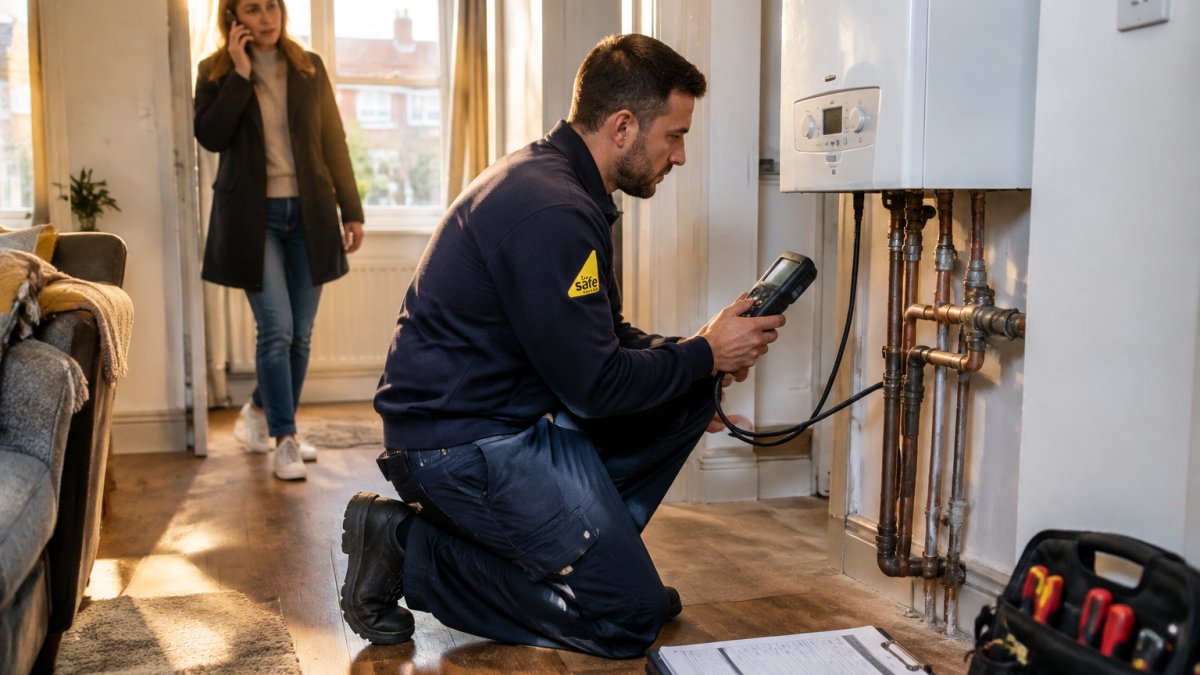
Emergency call-outs fail for one reason: nobody can get into the property. Coordinate access before the engineer is dispatched. Confirm the tenant will be home, or arrange a keyholder or managed entry, and log the appointment in writing.
Out-of-hours breakdowns need a clear escalation path. Tenants should know who to call, and that call should reach an engineer, not a voicemail. For a fuller walkthrough of after-hours cover, our guide to 24-hour boiler repair explains how emergency response is coordinated so nobody is left waiting in the cold.
Compliance, Costs and Approval Controls Across a Portfolio
Portfolio compliance is a reporting problem as much as a technical one. Across dozens of properties, certificates expire quietly, and a lapsed record is a legal exposure. Landlord duties are clear: a Landlord Gas Safety Record must be renewed every 12 months for each property with a gas appliance, and a copy must be given to existing tenants within 28 days of the check and to new tenants at the start of their tenancy.
Build a single register that tracks every Landlord Gas Safety Record, service date, warranty, and next inspection date, with renewal reminders set at least 30 days ahead of expiry. This register should be accessible to your property managers and updated after every visit. When a property changes hands or a tenancy ends, the register is the first document a new landlord or agent will ask for.
Costs and approvals need the same discipline. Agree call-out and repair authorisation limits in advance so minor faults are fixed without a delay while major work routes to a named approver. A common pattern is a two-tier approval: repairs up to a set threshold (for example, £250) can be authorised by the property manager, while anything above requires landlord or asset manager sign-off. For the compliance detail behind this, read our guide to landlord gas safety compliance.
| Control | What it covers | Why it matters |
|---|---|---|
| Certificate register | Gas Safety Records, service dates, warranty expiry | Prevents lapsed compliance and missed renewals |
| Authorisation limits | Repair spend thresholds (e.g. £250 manager approval) | Speeds up minor fixes without risking budget overruns |
| Written scope | Parts, access, labour, and timescales | Avoids surprise invoices and disputes |
| Reporting cadence | Monthly portfolio summary of jobs, certificates, and spend | Keeps owners and asset managers informed |
Watch out: a lapsed Gas Safety Record can lead to enforcement action and may invalidate insurance. Do not rely on memory or a spreadsheet that only one person can access, use a shared register with automated reminders.
Choosing a Heating Partner for Your Next Development
Choosing a heating partner comes down to proof, not promises. Ask for Gas Safe registration, insurance, references from comparable developments, and a clear description of how they handle documentation and out-of-hours cover. A partner who cannot answer those questions plainly will not answer them at 9pm when a tenant has no heat.
Central Heating Scotland offers Gas Safe registered engineers, same-day emergency repair, and management of landlord certificates across Glasgow and West Scotland. We install and repair boilers from leading brands, including Worcester Bosch, Vaillant, Ideal, Vokera and Alpha. If you want to know who you would be working with, our about page sets out how we operate.
The test is simple. A good heating partner makes your completions smoother and your compliance quieter. If yours does not, it is time to change.
Frequently Asked Questions
How do property developers choose the right boiler for a project?
Start with the property type and expected occupancy. A one-bedroom flat usually suits a combi boiler because it saves space and avoids a separate cylinder, while larger family homes with multiple bathrooms often need a system boiler and unvented cylinder to handle simultaneous demand. Check the manufacturer's warranty terms, confirm the model is on the Gas Safe register, and factor in flue routes and cupboard space during the design stage rather than after first fix.
When should boiler installation be scheduled during a property development?
Book the installation slot once first fix plumbing and gas runs are complete but before final decoration, so any making good can be finished in sequence. Allow extra lead time for boiler commissioning and the paperwork that follows. On multi-unit schemes, phase installations block by block and confirm engineer availability in writing, because a missed slot can push back handover dates and delay tenant move-in.
Can one heating contractor manage boiler installation and repair across multiple properties?
Yes, and a single contractor usually simplifies things. One point of contact covers installation, annual servicing, landlord gas safety checks and emergency repairs, which reduces the risk of gaps between trades. Ask for a named account manager, a clear response-time commitment for out-of-hours call-outs, and consolidated reporting per property so you can track compliance and spend across the whole portfolio.
What records should be kept after boiler installation or repair?
Keep the commissioning checklist, the Benchmark certificate, the manufacturer warranty registration and the Landlord Gas Safety Record for each property. Store repair invoices and engineer notes alongside them. These records prove compliance during inspections and support warranty claims if a component fails. A digital folder per unit, shared with the letting agent, saves time when a tenant reports a fault or when a certificate comes up for renewal.
Ready to take the risk out of your next development's heating? Get started with Central Heating Scotland and secure Gas Safe registered installation, rapid repair and hands-off landlord compliance across your whole portfolio.