 how-to
How to Handle a Broken Boiler With No Hot Water
Last Updated: November 6, 2026
Quick Summary
Yes, emergency plumbers do come out for a broken boiler with no hot water when it counts as urgent, such as no heating in freezing weather or a vulnerable person in the home. A hot-water-only fault is usually booked into the next available slot rather than a same-hour call-out.
- A gas smell, carbon monoxide alarm, soot or yellow flame means leaving the property and calling 0800 111 999.
- Most sealed systems run between 1 and 1.5 bar when cold, so top up below 1 bar via the filling loop.
- Write down any fault code exactly as it appears, as it is the most useful thing to give an engineer.
- An emergency call-out charge covers the visit and diagnosis, with the repair usually quoted separately.
- Tenants should report the fault to the landlord or letting agent in writing and keep a record.
Table of Contents
- Does a Broken Boiler With No Hot Water Count as an Emergency?
- Boiler Breakdown: What to Do Before You Call Anyone
- What to Tell the Engineer When You Book a Repair
- Emergency Plumber Call-Out Charge: What to Expect
- Boiler Repair Response Time: How Quickly Can Someone Attend?
- Why You Need a Gas Safe Registered Boiler Engineer
- Tenant and Landlord Next Steps After a Boiler Breakdown
- Book a Same-Day Emergency Boiler Repair
- Frequently Asked Questions
Does a Broken Boiler With No Hot Water Count as an Emergency?
A broken boiler with no hot water is not usually a gas emergency, but it is an urgent problem that needs a heating engineer.
The key question is simple. Is there a safety risk, or just an inconvenience?
Below, we explain exactly when to call for emergency help, what to check first, and how quickly a boiler repair can happen.
When No Hot Water Alone Is Not an Emergency
No hot water with working heating is usually a fault with the hot water side of the system only.
None of these are dangerous. They are inconvenient, and they need a boiler repair, but they do not need a same-hour call-out.
The exception is when a vulnerable person lives in the home, or when the outside temperature has dropped below freezing.
When Loss of Heating Makes It Urgent
Loss of heating in winter changes the picture. A cold home is a health risk for older people, babies, and anyone with a long-term illness.
Watch out: a boiler that has locked out repeatedly, shows a fault code linked to ignition or flue problems, or smells of gas is not a standard repair. Turn it off and call the gas emergency service.
Boiler Breakdown: What to Do Before You Call Anyone
Before you pick up the phone, run through a short, safe sequence of checks. Most boiler breakdowns are not caused by a failed boiler at all.
The aim is to sort your situation into one of three buckets: a genuine safety emergency, an urgent repair, or a routine appointment. Work through the steps in order and stop as soon as you reach a safety warning.
Step 1: Rule Out a Safety Emergency First
Stop and act on safety before anything else if you notice any of the following:
- A smell of gas, or a hissing sound near a gas pipe or meter.
- The carbon monoxide alarm sounds, or you feel dizzy, nauseous, or headachy in the property.
- Black soot marks, scorching, or a persistent yellow flame instead of a blue one.
If any of these apply, do not touch the boiler controls, do not reset it, and do not use your phone indoors. Open windows, get everyone out, and call the National Gas Emergency Service on 0800 111 999 from outside. This is a gas emergency, not a boiler repair, and it takes priority over everything below.
Step 2: Confirm the Basics
If there is no safety warning, check the simple things first:
- Power: confirm the boiler's fused spur is switched on and check the circuit breaker has not tripped. A tripped breaker that resets and holds is often a one-off; one that trips again points to a fault.
- Controls: check the thermostat and programmer are set to heating and hot water, and that the room thermostat is above the current room temperature. A thermostat turned down, a programmer in the wrong mode, or a flat thermostat battery accounts for a surprising share of no-heat calls.
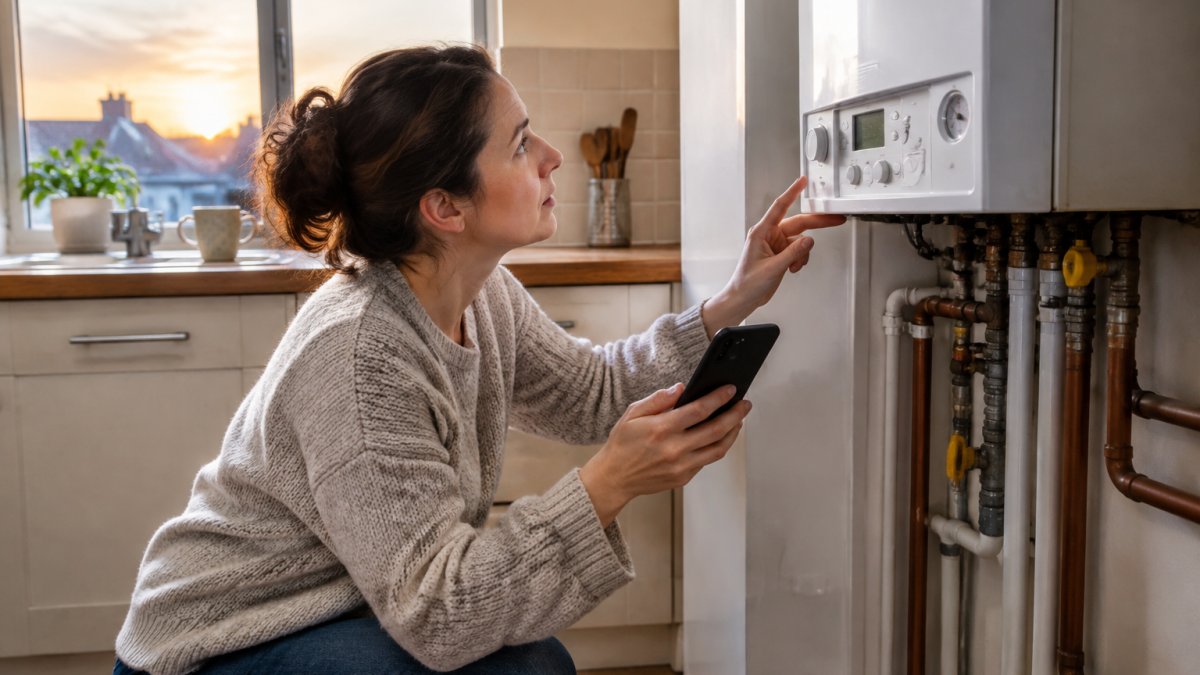
- Pressure: read the pressure gauge on the boiler front. Most sealed systems run between 1 and 1.5 bar when cold. Below 1 bar, the system may need topping up through the filling loop, following the boiler manufacturer's instructions. Do not overfill.
Step 3: Decide Which Bucket You Are In
Use what you have found to choose your next step:
- No hot water but heating works: usually a fault on the hot water side only, such as a stuck diverter valve, a faulty cylinder thermostat, or a jammed motorised valve. This is urgent but rarely an emergency. Book a standard repair visit.
- No heating and no hot water, no safety warning: an urgent repair. In mild weather it can usually wait for the next available appointment. In freezing weather, or where a vulnerable person lives, treat it as an emergency.
- Boiler locked out repeatedly, or a fault code linked to ignition or flue problems: do not keep resetting it. Book an urgent Gas Safe engineer visit and mention the code when you call.
Watch out: never remove the boiler casing, attempt to adjust the gas valve, or carry out any repair inside the appliance yourself.
The man is British.
Once you have your bucket, you are ready to book with the right urgency and the right information.
Work through these checks in order and stop as soon as you reach a safety warning.
| Step | What to do | Note |
|---|---|---|
| Step 1 | Rule out a safety emergency | Gas smell, CO alarm, soot or yellow flame means call 0800 111 999 |
| Step 2 | Confirm the basics | Power, controls, pressure, fault code, other gas appliances |
| Step 3 | Decide which bucket you are in | Safety emergency, urgent repair, or routine appointment |
| Pressure check | Read the gauge on the boiler front | Most sealed systems run between 1 and 1.5 bar when cold |
| Fault code | Write down any code exactly as it appears | The single most useful thing to give an engineer |
| No hot water, heating works | Book a standard repair visit | Usually a fault on the hot water side only |
| No heating and no hot water | Urgent repair; emergency in freezing weather | Treat as emergency if a vulnerable person lives there |
| Gas emergency | Leave the property and call 0800 111 999 | Do not reset the boiler or use your phone indoors |
What to Tell the Engineer When You Book a Repair
A clear, detailed booking gets you the right engineer and the right parts on the first visit.
Also describe the symptoms. Is there no hot water but heating works? Is the boiler firing then cutting out?
Mention the property type and access details, such as a key safe or a communal entry door. If you rent, say so. It changes who authorises the repair.
Emergency Plumber Call-Out Charge: What to Expect
An emergency plumber call-out charge covers the visit and the diagnosis, not the repair itself. Call-out charges vary between firms and depend on the time of day, location and urgency. The repair is usually quoted separately once the fault is diagnosed, and parts are often added on top.
Pricing depends on several factors, and it is worth understanding them before you book. For current prices or a quote, contact Central Heating Scotland directly.
What Drives the Call-Out Fee
- Time of day: evenings, weekends and bank holidays attract premium rates. A genuine emergency at 2am costs more than the same fault at 10am on a Tuesday.
- Location and travel: rural or hard-to-reach properties, congestion charges, and parking can add to the fee. Ask whether travel is included.
- Urgency: a same-hour response costs more than a next-day appointment. If your situation can safely wait, a standard slot is cheaper.
What the Repair Itself Might Cost
Repair costs depend on the part and the labour involved. Repair costs depend on the part and the labour involved, and the exact figure is confirmed after diagnosis. More complex work, such as a heat exchanger replacement or flue work, costs more. Where the boiler is old and the repair is extensive, an engineer may advise comparing repair against replacement.
Questions to Ask Before You Book
Ask three things before you commit:
- Is there a fixed call-out charge, and exactly what does it cover?
- Is the repair quoted separately after diagnosis, and is there a written estimate before work starts?
- Are parts included or added on top, and are there any charges for a follow-up visit if a part has to be ordered?
Get the answers in writing or by text. A reputable engineer will explain the charge before attending and will not start work without your agreement.
Watch out: be wary of any engineer who quotes a suspiciously low call-out fee and then inflates the repair price on site, or who asks for cash upfront before diagnosing the fault. A clear, itemised quote is the sign of a legitimate operator.
How to Keep Costs Down
- Do the safe checks first, so you are not paying an emergency fee for a thermostat setting or low pressure.
- Book a standard appointment if there is no safety risk and no vulnerable person in the home.
- Have the boiler make, model and fault code ready, which shortens diagnosis time.
If cost is a concern, ask about the total expected cost, not just the call-out, so you can compare quotes on a like-for-like basis.
Boiler Repair Response Time: How Quickly Can Someone Attend?
Response time depends on how urgent the fault is and when you call. Same-day emergency boiler repair is available for a genuine emergency, such as no heating in freezing weather or a suspected leak.
If you want a realistic picture of how long the repair itself takes once an engineer is on site, read our guide to how quickly a boiler can be repaired.
Why You Need a Gas Safe Registered Boiler Engineer
A Gas Safe registered engineer is legally required to work on gas appliances. The Gas Safe Register is the official list of engineers who can legally and safely work on gas in the home. You can check any engineer's ID card and registration number on the Gas Safe Register website.
Using an unregistered engineer puts you at risk of carbon monoxide poisoning and may invalidate your boiler warranty. Always ask to see the ID card before work begins.
Tenant and Landlord Next Steps After a Boiler Breakdown
Tenants should report the fault to the landlord or letting agent in writing and keep a record.
After a breakdown repair, landlords should confirm the gas safety check is up to date. Our landlord safety check service covers the CP12 certificate and paperwork, so compliance stays on track.
If you are a tenant with no hot water, our hot water repair service explains your options, and our guide on emergency boiler repair near you helps you decide if your situation qualifies for fast help.
Book a Same-Day Emergency Boiler Repair
A broken boiler is stressful, but you now know the difference between a true emergency and an urgent repair. Check the pressure, note the fault code, and call when heating fails in the cold or a vulnerable person is at risk.
At Central Heating Scotland, our Gas Safe registered engineers cover Glasgow and West Scotland. We offer same-day emergency boiler repair and landlord gas safety compliance. Book a broken boiler repair and get your heating and hot water back on.
Frequently Asked Questions
Will an emergency plumber come out if my boiler has stopped working?
Most emergency heating firms will attend a broken boiler, but priority goes to homes with no heating in cold weather, vulnerable occupants or a suspected gas leak. A hot-water-only failure is usually treated as urgent rather than an emergency, so you may be offered the next available slot rather than a same-hour visit. When you call, describe the fault, any display code and who lives in the property so the engineer can judge urgency.
Is no hot water from a broken boiler an emergency?
On its own, no. Losing hot water while the heating still works is inconvenient but rarely dangerous, and many firms will book it as a priority repair rather than an out-of-hours call-out. It becomes an emergency when the property has no heating either, the occupants include young children, older people or someone with a health condition, or temperatures are near freezing. In those cases, say so clearly when you book.
What should I check before calling an emergency plumber?
Check the boiler's pressure gauge is between 1 and 1.5 bar, confirm the thermostat and programmer are calling for heat, try new batteries in the room thermostat, and look at the display for a fault code. Also check other gas appliances such as the hob; if they have stopped working too, treat it as a gas emergency and call the National Gas Emergency Service on 0800 111 999 rather than a plumber.
Who should I call for a broken boiler: a plumber or a heating engineer?
A heating engineer is the right call for a boiler fault. Boiler work on gas appliances must be carried out by a Gas Safe registered engineer, and you can check their registration and the specific work they are qualified for on the Gas Safe Register. A general plumber can handle leaks and pipework, but for a boiler breakdown what to do first is confirm the engineer holds gas qualifications.
If your boiler has broken down and you need an engineer who turns up when promised, get in touch with Central Heating Scotland. We offer same-day emergency repair, Gas Safe registered engineers, and clear costs before work starts. Get started with Central Heating Scotland and get your home warm again.